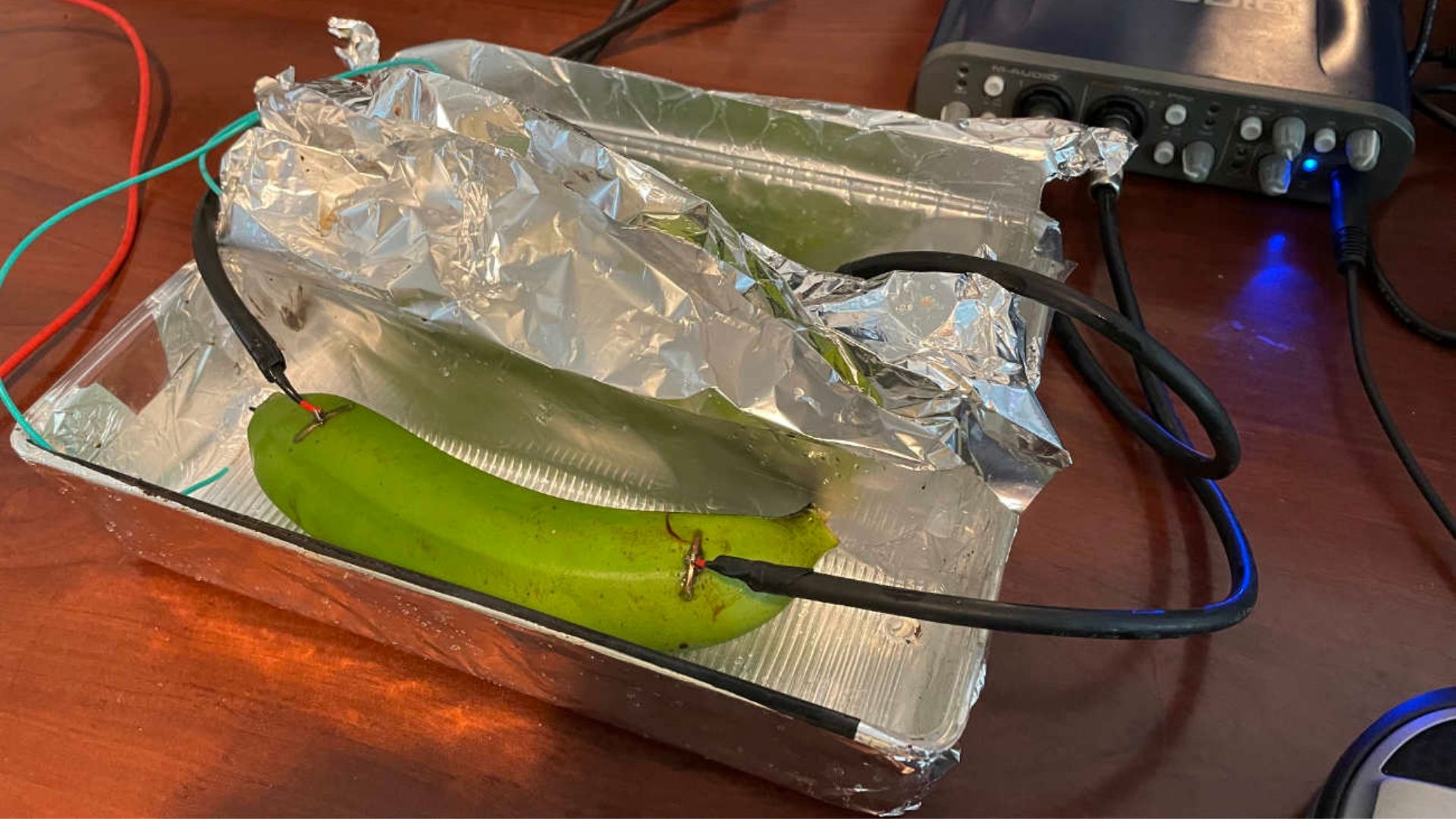
I’m lightly active in the headphone enthusiast space. Even in the more light-hearted circles there is still an elevated amount of placebo bullshit and stubborn belief in things that verifiably make zero difference.
It’s rather fascinating in a way. I’ve been in and out of various hobbies over the course of my life but there is just something about audio that attracts an atmosphere of wilful ignorance and bad actors that prey on it.
I’ve been in the audio enthusiast community for like 17 years now. When I was fresh, the internet commentators had me thinking there was some audio heaven in the high end compared to the mid range priced gear. Now I know better and the gear community is not so high end price evangelicals like it used to be. I feel like there was a before and after the $30 Monoprice DJ headphones and the wave of headphones since. Then especially IEMs. Once ChiFi really got rolling with IEMs and amplifiers and DACs, $1000+ snake oil salespeople got to deal in a way more competitive market
Same with speakers. Internet changed everything. No more at the whim of specialty audio stores stock and Best Buys. Now you got the whole worlds amount of speaker brands at a click of a finger plus craigslist/offerup. Also again ChiFi amplifiers and DACs. Also improvements in audio codecs whether for wireless or not. Bluetooth audio was awful until it stopped being awful as standards improved
These days I mostly see the placebo audio arguments in streaming service and FLAC/lossless encode fanboys. Headphone and speaker communities these days seem a lot more self aware and steeped in self-deprecating humor over the cost, diminishing returns, placebo, snake oil they live in today compared to 17 years ago. I want my digital audio cables endpoints plated with the highest quality diamonds to preserve the zeros and ones. No lab diamonds. Must be natural providing the warmth only blood diamonds that excel in removing negative ions. I treat my room with the finest pink himalayan salt sound absorbent wall panels to deal with the most problematic materials used by homebuilders. Authentic himalayan salt has been shown to be some of the highest quality material in filtering unwanted noise and echos while leaving clean pure audio bliss
These days I mostly see the placebo audio arguments in streaming service and FLAC/lossless encode fanboys.
The clamour for lossless/high-res streaming is the audiophile community in a nutshell. Literally paying more money so your brain can trick you into thinking it sounds better.
Like many hobbies, it’s mainly a way to rationalize spending ever increasing amounts on new equipment and source content. I was into the whole scene for a while, but once I had discovered what components in the audio chain actually improve sound quality and which don’t, I called it quits.
Usually when I hear someone swear by lossless audio one service provides compared to another, I swear the reality is either placebo or one service is just using a better masterering of an album compared to another. The service that has on their service the better version album mix and mastering. Like they could serve it as 192kbps MP3 and sound better than a lossless encoded album version with the non ideal mix and mastered release
Oh, 100%. I actually tested this by recording bit perfect copies from different streaming services and comparing them using Audacity.
I found that they only way to hear a difference between the same song played on two different platforms was 1) if there was a notable difference in gain or 2) if they were using two different masters for the same song. If two platforms were using the same master version, they were impossible to tell apart in an ABX test.
All of this is to say that the quality of the mastering is orders of magnitude more important than whether or not a track is lossy or lossless, as far as audible audio quality goes.
Not here to argue I can hear the difference, because I can’t. But in audio collecting where the size and burden of even large lossless files isn’t much different from lossy files, why care? I download the flac files and compress upon delivery to the client where the space might be of a larger concern.
I do the same, as it happens, so I won’t argue with you.
As for “why care?”, I’d say it’s about making informed decisions and not spending money unnecessarily in the pursuit of genuinely better sound quality.
Yeah, I don’t get too deep into that game. I do have some higher-ish quality headphones and speakers though. I also find that subwoofers are largely underrated by audio snobs.
I’m a person with sensitive hearing and mp3 always sounds muddy to me compared with a flac or wav rip. My coworker poo-pooed this notion, but I proved it to him. Mp3 does alter the sounds, most people won’t notice, but for somebody that does hear the differences its annoying. I would not spend 10k or anything. I paid $15 for an old 5.1 system, and max $80 for a pi2 with a DAC hat. LOL
For me its like if you stood outside a persons house and heard them talking vs their words coming over their TV. There is a noticable signature that let’s you hear its the TV or real people, and that’s what mp3 vs wav is like for me.
I can also hear my neighbours ceiling fan running in the connected town home. That almost inaudible drone of the motor running, drives me nuts
I don’t about you, but in my country Tidal is cheaper than Spotify. But that might be placebo
/jk, though tidal is actually cheaper here. I can’t tell the difference in blind testing between 320 kbps mp3 exported in Reaper and the original wav; they’re indistinguishable to me. Actually, I can tell them apart with some airwindows dithers, but that is a pretty esoteric exception.
I like lossless compression. But not because I’d be a audio nut. I prefer it from a data retention and archival viewpoint. I could cut and join lossless data as often as i like, without losses accumulating.
Do you often cut and join audio that you did not record yourself?
I would not call it often, but it happens.
No more at the whim of specialty audio stores stock and Best Buys.
I remember in 2017 going into an audio store near where I worked, and the guy was emphasizing how clear the audio sounded on certain (expensive) setups, and how it was streaming in from “Norway” which was better than what you’d find on Spotify or YouTube. It took me a while to piece together what he was on about.
Dude was talking about Tidal. All he meant was they streamed lossless formats via Tidal. As if anyone could tell the difference between, say, stereo 192kbps AAC and flac.
Also, remember the supposed amazing quality of MQA? What a shitshow. It’s rather remarkable that a pair of Airpods Pro 2, when fit into your ears properly, are essentially perfectly tuned headphones for only $250 or less compared to some of what the competition sells. Not to say I don’t love my Sennheiser HD650.
I’ll agree that sound quality doesn’t seem to be consistent but I will say that Bose is a very nice quality sounding company. Never been disappointed by them.
I fucking love audio and have an extensive collection of equipment. The last thing in the chain before your ears (so headphones and speakers) will absolutely make a difference and the thing that provides power to that can make a difference. But the cables? The fucking cables?! Absolutely no impact once you’re above like $10. Turns out, electrons are electrons and they behave like electrons. Shockingly that doesn’t change in copper, gold plated copper, pure silver, or mud. Doubly so for the non analog part of the chain. Hell I’ve even seen “audiophile grade” ethernet cables.
The other part of the equation is if the differences made by the things that do make a difference actually matter to the listener. They do to me, but my dad is more than happy to just use the speakers on his Dell monitors.
Well, that’s not entirely correct. Given a long enough run, attenuation will absolutely cause bad cables to perform poorly. Like your not getting a 10 meter run on bananas. That said, for any modern cable, that run has to be greater than 50 meters for it to even start mattering. So if your wiring up a warehouse, you probably need to care about the type of wire your using.
Like your not getting a 10 meter run on bananas.
Source? /s
Oh yeah, definitely. The wiring needs for an industrial space or event venue are different than a domicile, but I don’t think anyone’s buying audiophile snake oil for those. They really seem to market that kinda crap to the fool and their money crowd.
It’s been like this for decades, according to my dad. Well before the internet.
I’m a musician. I swear by Beyerdynamic DT700. Fucking great headphones for like an insanely reasonable price
well obviously, all this proves is that copper wires are just as bad as wet mud. Every audiophile knows you need gold oxygen nitrogen purified wires blessed by a voodoo witch doctor.
Silver is the better conductor. Even if it is priced so that peons can afford it.
Just ask an audiophile what they think about blind tests. If they argue against them you’ve found a snake oil salesman.
“You can’t trust blind tests for audio, that’s the wrong sense bro. You need double deaf studies, obvs.”
Now if they’re deaf tests on the other hand…
Most people can’t tell the difference between a 320kbps mp3 and lossless, but hey if folks really want to waste their money on snake oil like gold-plated cables then I say let ‘em.
I did a blind test, and found it depends on the genre.
Slow, chill music is completely transparent when compressed, no matter how hard I “audio peep.” It’s not even a question.
But something “dense” like System of a Down has audible distortion. It loosely (not always) coincided with the bitrate of the flac files, which kind of makes sense, though even the extreme end is hard to notice unless you know the particular song very well.
Also… a lot of recordings kind of suck. It’s crazy to worry about tiny bits of distortion when a bit perfect master is already noisy and distorted.
I kinda want to start a snake oil audio cable company. It’s gotta be one of the easiest paths to retirement
Reminds me of the lengths people go with their peripheral purchases to save 1-2ms of input latency for playing games with like a 20 TPS tick rate on a wifi connection
Yep, and an especially fun fact is that people with high-end equipment prefer MP3 over lossless.
The advantage of good wire is isolating the signal from interference. However, if you aren’t in an electrically noisy environment, anything that can conduct electricity will do just as well.
Something in my computer monitor isn’t shielded and will alert me to a incoming cell phone call a second or two before the phone rings.
I thought audio quality was more to do with the source and the destination. If you have a shit needle on a record or a speaker made of wood then its gonna sound like ass.
I never once thought it had anything to do with the cables. Unless they were frayed or damaged in some way.
But i am not an audiophile, i record my own music and mix etc, but never worried about cable quality before.
I was buying a receiver and speakers in 2020 and when it came time to pick out speaker wire, the salesperson walked over to where the wire was and began the pitch…
Salesperson: so when the frequencies are higher the electrons end up traveling only on the outer layer of the wire instead of in the middle…
Me: yeah, skin effect, I did electrical engineering
Salesperson: ah, so I guess you know you don’t need this then (pointing to gimmicky monster speaker cable that had a single strand of wire in a spiral around the main bundle with a clear jacket so you can see it)
Me: correct (grabs the cheapest 16awg)
Exactly this, the cables never mattered. They’re the least significant part of an audiophile system and I doubt anyone could tell the difference between a crappy cable and a good quality cable. People get good quality cable for durability rather than sound quality.
Cable quality only matters in long distances, when the dumping of the signal is noticeable.
If the distance is so short that there is not any voltage drop and still out powering the external noise. There is in effect no influence
Oh yeah, for sure. I didn’t include that part because an audiophile setup rarely has a need for long distances.
I think the term audiophile has changed in the last decade or two, because now i keep seeing being used to mean “someone who likes music more than the average person”. Before it was more “had an entire room dedicated to music listening and if you move their chair a millimetre they will literally murder you”
That’s the kind of person who swears that can tell s huge difference based on cable (but, of course, never in a blind test).
There are websites dedicated to selling them things they don’t need. A 1m audio cable can cost several tens of thousands of pounds/dollars. And they’ll buy them and swear that they make a significant difference to the timbre of the hi hats on track 3 of The Joshua Tree
Think I’m exaggerating? Here’s a cable, for home use. 8ft. Yours for the low, low price of £98,770
That’s not a pair, btw…
I do mean “person with a huge setup dedicated to music listening”. An audiophile who actually knows what they’re talking about will tell you to get any cable from a reputable brand.
But of course you also have “audiophiles” who have no idea whatsoever.
Cables give resistance… thats all…
I heard one guy talk about the importance of cable shielding and connector material and shit once, but the ones I actually know just talk about the other hardware (speakers, mixing pults, lots of terms I couldn’t recite).
To be fair, the signal is only going through these suboptimal conductors for a very short distance.
Try wiring up your stereo with 50 feet of bananas, and you might start having problems.
There’s always music in the banana chain… or something like that
I used to be an audiophile. I spent a lot of money on speakers, and amplifiers, and DACs. But I always found the audiophile cable crowd a bit nuts. And the people that are buying audiophile versions of stuff in the digital domain are full on delusional.
I say “used to be” for two reasons. One, hearing everything does not always mean better. A lot of the time it just reveals imperfections in the recording. And depending on the space, and ambient noise, more headroom can be worse because it just pushes the quiet stuff below the background. And, you are going to have to listen to music in places that you do not have your gear and it is going to sound bad if you get too used to the good stuff. So your music life may be worse overall.
But the biggest difference is that I am older. I just cannot tell the difference as well as I used to.
But most people spend too much money on the equipment and not enough on the sources. You do not need a $20,000 setup if you are listening to badly encoded MP3 or AAC files for example.
But if you have high quality FLAC or Opus sources (or really high-end analog), you do not have to be an audiophile to tell the difference. Same with linear power supplies. You can hear the difference even if you do not spend so much money.
Like wine, audiophiles often make it more about the money they spend than the quality they are getting or the experience they are having.
That said, I can still hear well enough to know that 80% of the people that play music around me turn it up past what their amp can handle and it clips like crazy. I do not know how people listen to that.
But if you have high quality FLAC or Opus sources (or really high-end analog), you do not have to be an audiophile to tell the difference
The analysis showed that there was no statistically significant difference in quality between the un- compressed signals and AAC-LC 320 kbps compression, which means participants did not perceive difference between two formats
https://downloads.bbc.co.uk/rd/pubs/whp/whp-pdf-files/WHP384.pdf
Could be they were both shit lol. I couldnt see (on mobile) what playback system was used.
I retired from being an “audiophile” when I had 5 drivers stuffed into one earbud. It does sound nice compared to a single driver though, especially for gaming.
A good interview with Bob Carver if you like audio history https://podcast.asknoahshow.com/25
Behold:
5.4 Electrical Conductivity Measurement This method includes electrical impedance spectroscopy (EIS) and dielectric analysis (DEA). The physical state of a material is measured as a function of frequency in EIS and the frequency ranges from 100 Hz - 10 MHz. It is simple and easier technique used to estimate the physiological status of various biological tissues49-52. Experimental frequency response of impedance is characterised by electrical equivalent circuits of materials. The physical properties of materials can be quantified by monitoring the changes in parameters at the equivalent circuit, among various equivalent models proposed53-54. DEA measurement is used in high frequency areas, generally 100 MHz - 10 GHz. DEA is used in moisture estimation and bulk density determination

So a overripe banana is an interesting high-pass filter, kinda like a capacitor, though the big takeaway is the conductance vs ripeness.
So if you want to test if a banana is ready to eat, hook it up… preferably with several other bananas in series. If the music is too loud, they are ready. Too quiet, and it’s not time yet.
The moment you give me a link to a banana tree/MP3 player/ripeness tester/EQ:

To be fair, “audiophiles” are morons.
What do you mean? I always pay extra for the audiophile version of vinyl records!
There’s a big difference between a $100 sound system and a $1000 sound system. I’ve gotten the “audiophiles are dumb” lecture for suggesting someone upgrade from 2x4" computer speakers to actual studio monitors for working on their music. But their speakers literally could not reproduce some of the frequencies thru were trying to make, so they mixed the bass WAY the fuck too loud.
But yeah, diminishing returns start to kick in around that point. Quickly becomes the eternal story of a Fool and His Money.
But morons with money to spend! The best kind of moron.
I love seeing this story… it reminds me of 30 years ago when I worked in the telephone industry. Heard about telephone copmanies rolling out service in very very rural areas - running signals over barbed-wire fences because it was too expensive to run dedicated cables. That did degrade the signal, but it worked.
I know it’s a completely different thing entirely, but it just gave me nostalgia remembering hearing about that.
I’m jealous of people who can’t tell the difference and have no need to buy audiophile grade SSDs

This just shows that bananas and mud are materials for excellent audio equipment. I am looking forward to my gold-plated banana.
So wait, did they send analoge or digital signals through? Because digital means you could send it through anything and as long as it gets through its the same. The cable only matters when you ARENT using digital signals.
Analog, and what really matters for analog signal is if the wire carries load or not.
Like a phono cable from a record player or a analog signal cable from an old sound card matters, but it doesn’t matter how you send the amplified signal to the passive speakers.
This means if you have a HDMI cable going into a decent AVR and speaker cables coming out, you basically can’t do anything wrong.
The way audiophiles tell sound quality is 99.99% subjectivity and 0.01% objectivity.
Well, yeah. Everyone’s ears are different.
Yes ears are different. And eyes. And preconceptions. That is subjectivity. If you want to know what is actually better you need to eliminate those biases. e.g. in audio the standard is an A/B test where the test plays audio from 2 sources at the same volume through the same headset and the recipient has to choose which is best without knowing anything else. Done properly you’ll know if there is a measurable, objective difference between the two sources. Double blind is even better.
The issue for audiophiles is that this is not the way things are done. More often they’re sold snake oil - hyper expensive audio cables, beech wood knobs, concrete turn table bases etc. Things that do precisely do fuck all to improve audio quality except in their imaginations.