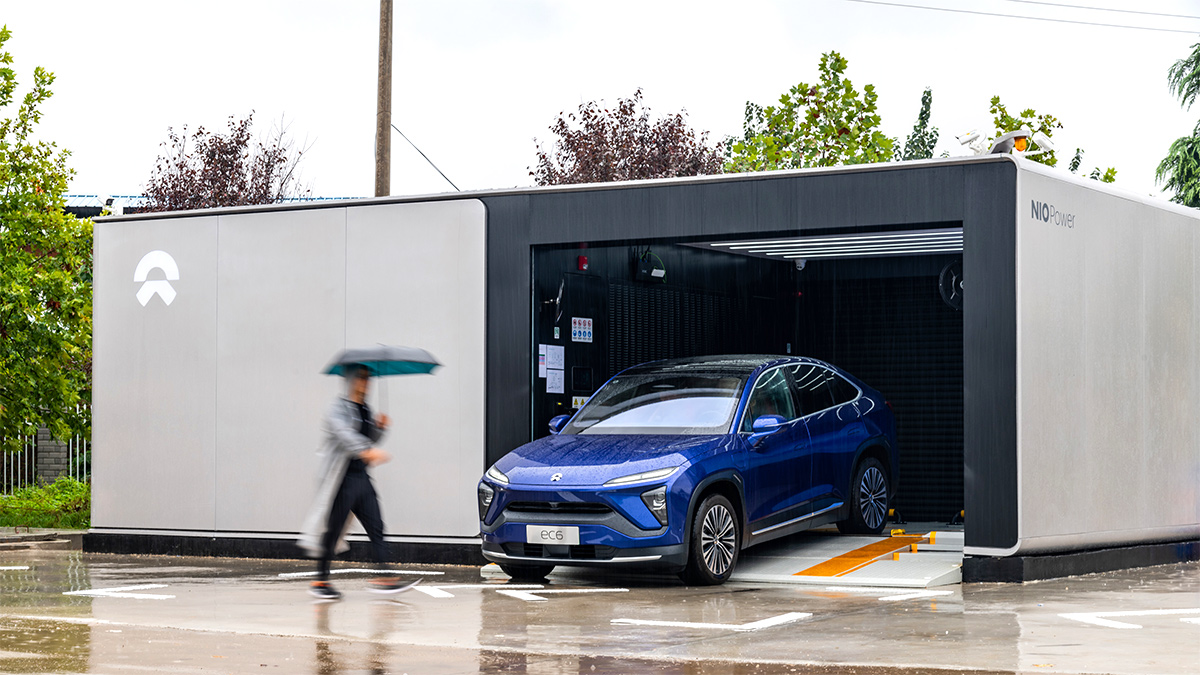
Battery swapping is a technology that could solve one key barrier for EV adoption: consumers’ range anxiety and the long waiting time for battery charging. Wouldn’t you feel more assured on a weekend trip if you knew you could stop at a swap station and replace depleted battery packs with fully charged ones in five minutes? But this isn’t easy to do, as Tesla and Better Place’s past failures. In China, however, battery swapping has been a reality for a couple of years. How did Chinese companies like Nio make it work with 2,300 swapping stations nationwide? What can companies outside China learn from the Chinese experience?


I don’t oppose the idea of battery station, but who owns the battery then? When I bought the car, am I leasing the battery? How about used car?
The company (NIO) owns them and you are leasing the batteries. The car is cheaper this way, as you don’t buy the battery up front, but pay a monthly fee (~200+ in Germany).
You have a fixed number of swaps per month, above that you have to pay extra.
Source: colleague uses a car like this and explained the details.
What if they EOL the battery and stops the leasing program? Now the perfectly fine car is non functional because it’s missing a battery. If I replace it, I’m just contributing more waste, not in materal but energy. Is that the “green” future we all after?
I’d assume you could still charge them the regular way. You’d just no longer get a fresh one, but that just puts you on par with the other EVs
The ownership is still questionable. Even if that’s the case, you’re stuck with the battery you last swapped in, which you don’t know the wear level or how long it will last.
I would guess a swappable battery would be separated from the vehicle, similar to a gas bottle for a grill.
The battery would be rented for a small deposit and on swapping you only pay the energy + service fee.
I guess you could also buy one to own, but then could not swap that.
That’s how it would make sense, at least.
I will take ownership over leasing as a 200 miles range is more than enough for me. But you will see if the leasing model works out, they will only have leasing left for you as that’s a continous money flow. Or have the battery be super expensive to discourage you buy it.
Renault tried leasing the batteries in EV in an effort to lower the initial cost of the car while increasing their tail for future owners. They abandoned it only a few years in as it was a disaster for their used market that got worse the older the car got as nobody wanted the ongoing cost. Only the initial owner saved money, and only if they managed to use PCP finance with a balloon set before Renault realised that the battery leased cars would be worth significantly less.
Renault also did not like that with older cars they would be liable for the battery replacement far sooner than they planned as they (initially) had a higher percentage unusable before they had to do a free replacement vs. a normal battery warranty, made worse as a leased battery has a warranty as long as you are paying the lease.
Renault could repossess the car if you stopped paying the battery lease and refused to buy it out. Its like any car finance that puts a lien or similar on the car, you do not own it till its gone.
It’s not just that, its what happens if you get a battery from a guy named roger who said he knows what he’s doing and fucked with it?
Battery swapping sounds great, until you put it into a real world scenario.
There are already plenty of shady car mechanics named roger who can swindle you out there…
Yea, sure but that doesn’t effect me because I have the chance to know who’s working on my car, you don’t if you habe battery swapping going on.
Not just about “who owns it?” but also how does it work with insurance if something goes terribly wrong and who will bear the responsibility?