In other words, corporate leadership is starting from the premise that AI has (or will) radically change the business, and they’re working backwards from that premise to find the evidence to support this article of faith.
Sounds familiar. The proof-of-work blockchain scheme which was the fad a while ago is also often described as a solution in search of a problem.
I feel like block chain as a public ledger has found quite a few purposeful uses, and was a solution to a handful of problems most people rarely if ever encounter. Then fake money got involved
Yes, exactly.
Block chain would have been an amazing solution to most democratic vote validation processes.
I’m glad you specifically pointed out proof-of-work blockchains.
They’re very inefficient (economically and ecologically) by design. In almost all cases this design isn’t warranted.
Alas there are other designs and while most of them are rubbish as well, a few ones are doing things quite right.I hope that just like other schemes than proof-of-work were thought of regarding blockchains, there will be AI models that are way, way more efficient and ideally can be run locally - for those cases that can use AI…
I typed into Google “potatoes pressure cooker” to get a reminder of how long to cook them. The AI told me, and correctly said that I should use the steamer sieve, but also told me to salt the water. The water that would be under the potatoes and that wouldn’t touch them.
I asked why, and the AI said that little splashes of salt water from the boiling would land on the surface of the potatoes and salt them gently, that the salt would increase the boiling temperature, and that the vapour would be aromatic.
I pointed out that the amount of salt landing on the surface of the potatoes would be negligible, that the vapour is distilled water in gas form, and that the increase in boiling temperature from salting the water is less than 1°C. The AI said, oh yeah, you’re right on all counts. Don’t salt the water.
What it has been doing was exactly what an LLM does. It gave me the received wisdom from the internet.
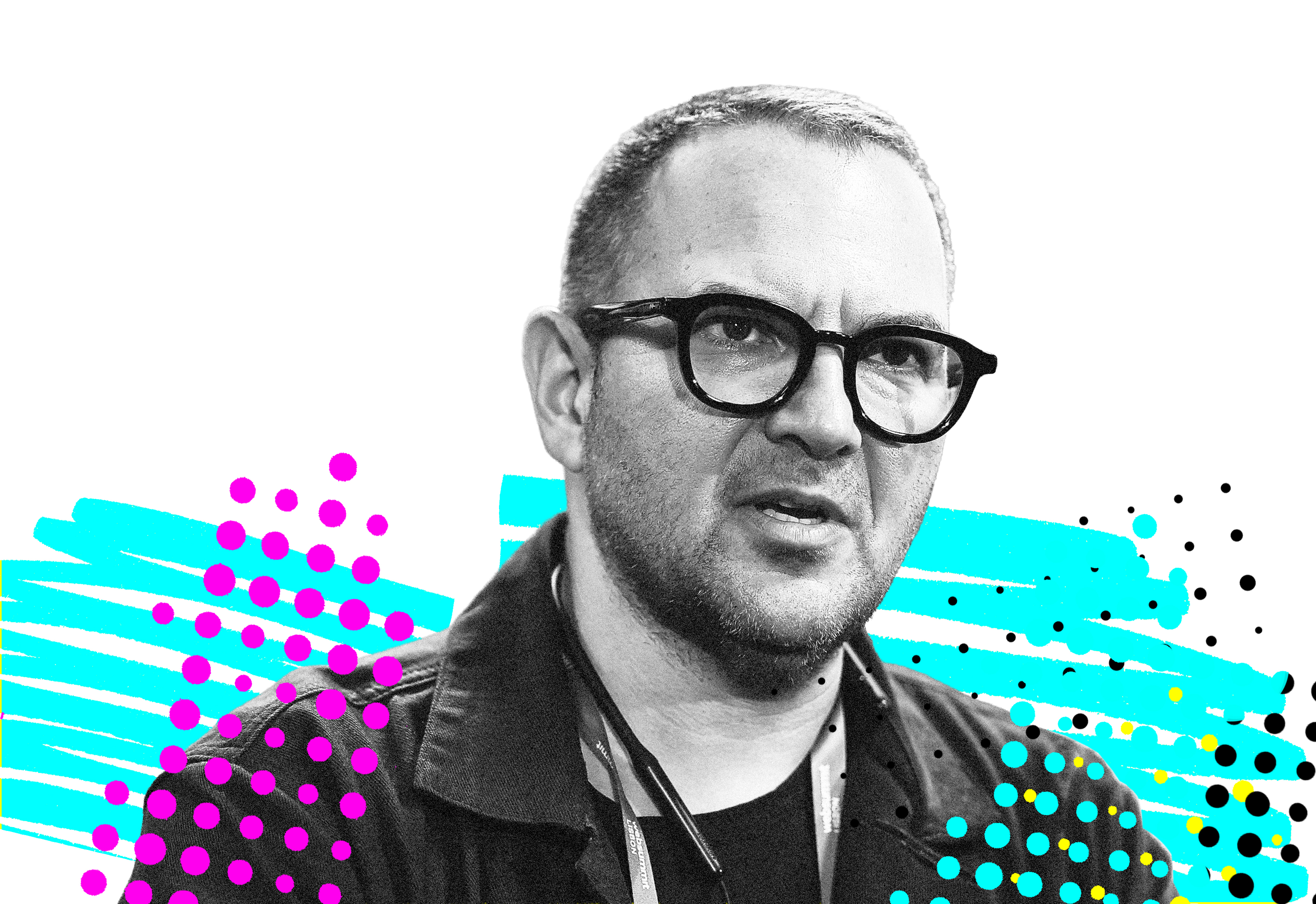
That aligns with what Cory Doctorow was saying here, namely that all the AI successes were from people who already knew what they were doing and could use the AI as a tool. Not from people who had no clue and just let AI do the job.
I use google “ai” in when thrifting for audio gear. Minimum 80% of the time it gets something GLARINGLY wrong. “Oh ho ho! You correctly pointed out that I was completely wrong on all counts! An astute observation! Let me try again but this time give you the CORRECT information.”
I mean, to be fair, that’s a dirt cheap model you’re talking to, and Google is not exactly at the forefront of any tier of model, cheap or otherwise.
Is that you being fair or is that you rushing to defend something?
As if you don’t know these “tools” don’t work.
I really like a song that has intro and outro samples and I wanted to know where they were from, so I googled. Google AI promptly informed me that the song has no samples. Guess that settles that.
My husband was recently trying to find an exact quote from Richard Pryor’s character in Lost Highway, so he Googled it.
Google’s AI overview said that Richard Pryor was not in Lost Highway and instead gave some suggestions for other films we might be thinking of.
The quote he was trying to remember was, “There’s nine people down here, and you can ask seven of them. If you can get that price from one of them, I’ll let you ask the other two.”
Salting the water would increase the boiling temperature I guess, but it seems like a waste of salt because that info isn’t meaningfully changing the cooking time
I do potatoes in my instant pot but leave the water in, it just gets absorbed. So the salt is effective in that case. I salt the potatoes themselves and toss them before adding the water, too, so they should get reasonably seasoned.
Also i use soup stock.
Mashed, though.
Salting the water is relevant when not using a pressure cooker. It makes no sense when you’re steaming them in a pressure cooker. AI is a good tool, sometimes. But for everyday tasks, it is irrelevant and often wrong.
That “AI” is a completely dumbed down one with reasoning disabled. Of course it’ll make stuff up.
I use AI as a writing tool, not as a substitute for authorship.
The ideas, intent, perspective, and final judgment are mine. I decide what I want to say, what belongs in the piece, what does not, and whether the finished version accurately represents me. AI may help me organize my thoughts, clarify a sentence, improve the flow, or find wording that better expresses what I already mean. That is not fundamentally different from working with an editor, dictating to a transcriber, or revising a draft after receiving feedback.
What matters is that I review the final work, approve it, and put my name on it. By doing that, I take responsibility for every sentence. If the writing is thoughtful, accurate, and effective, I am responsible for those choices. If it is careless, misleading, generic, or full of slop, that is also my responsibility. Blaming the tool would be an attempt to avoid accountability.
AI does not decide what I believe. It does not decide what I am willing to defend. It does not decide what I publish under my name. I do.
The tool may assist with the writing process, but the authorship comes from intention, judgment, selection, revision, and responsibility. The final work is mine because I chose it, shaped it, approved it, and signed my name to it.
that’s bullshit.
Why?
“authorship is when i make a few edits and sign my name to slop”
if you have willingly handed over your primary writing tool to a machine (for which there is no real meaning, association, appreciation, or delight in words), it is difficult for me to take your commitment to writing or “authorship” seriously.
I did not say “authorship is when I make a few edits and sign my name to slop.” That is not my argument.
My argument is that authorship is grounded in the origination of the ideas and intent, control over what goes into the work, judgment over how those ideas are expressed, endorsement of the final form, and responsibility for the result. Assistance with the linguistic realization does not, by itself, transfer authorship.
You point out that the machine has no meaning, association, appreciation, or delight in the words. I agree. But I do. That is precisely the distinction I am making. The machine does not know what I mean, care whether it represents me, recognize when an analogy fails, or decide whether an argument is worth defending. I am doing those things.
You seem to be defining “writing” as personally generating the initial sequence of words. Maybe that is where we actually disagree. But that definition cannot simply be assumed and then used to prove that I am not writing. Why should authorship reside specifically in first-pass word generation rather than in the thought, intention, judgment, revision, and control that determine what the final words mean?
That is the argument I am interested in having.
i started to read your response, and then i remembered i can’t trust the degree to which you authored it.
i’m not interested.
A sneer is easier than an answer, and certainty is a lovely refuge when you have no intention of defending it.
You accuse me of surrendering thought to a machine, and then, the moment you are asked to justify that accusation, you surrender thought entirely.
How convenient.
With a wave of the hand, every difficult question disappears. You declare the words contaminated by the tool that helped shape them and thereby absolve yourself of any obligation to consider what they actually say.
No examination. No argument. No possibility of correction.
You accuse me of regurgitating the output of a machine, yet what have you offered in return?
A familiar sneer. A borrowed insult. A conclusion retrieved intact from the cupboard of approved contempt.
You recognize the hated object, produce the expected response, and call the reflex thought.
That is the irony you seem determined not to notice.
My argument from the beginning has been that a machine must be tempered by a human mind. It possesses no responsibility for what it produces. Whatever value emerges from its use depends upon the person capable of examining it, rejecting it, correcting it, shaping it, and finally standing behind it.
But a mind cannot temper anything if it refuses examination itself.
And that is where your position becomes more interesting than your insult.
A mind that refuses examination begins to resemble the very machine you claim to despise. It receives a familiar stimulus, reaches for the familiar pattern, and produces the familiar response without troubling itself over whether the response is true.
Input. Recognition. Output.
The machinery of contempt.
Ignorance itself is no shame. Every one of us is ignorant of almost everything. I have been wrong before and will be wrong again. If you can show me where, I gain something from the correction.
But there is something contemptible in making a virtue of ignorance.
In encountering an argument and proudly announcing that you will not examine it, then mistaking that refusal for discernment. In treating incuriosity as wisdom. In believing that because you have protected yourself from an argument, you have somehow defeated it.
You have not defended your position.
You have insulated it.
Those are not the same thing.
Thought requires a certain vulnerability. You must permit an idea close enough to examine it. You must risk finding weakness in your own position. You must allow the possibility that another person, even one using a tool you despise, might know something you do not.
Without that, certainty does not become strength.
It becomes brittleness.
You tried to cut me with the accusation that I had surrendered my mind to a machine. But in your eagerness to make it, you performed the very surrender you condemn.
You saw the signal.
You retrieved the response.
You refused examination.
You produced the slop.
And so the question remains exactly where I left it:
Will you defend what you believe?
Or is your conviction only strong enough to survive so long as you never allow an argument near it?
“I dont write anything but i take credit for everything”
I was reading the initial comment with peer-reviewed publications in mind and it all sounded like standard practice, but then I read yours and was like “oh, are we talking about books now?”
Either way, its still a bad look. Peer review is even worse than Op Eds, or fiction, or what have you… But its all equally socially degenerate
Interesting. When you want to criticize the argument, the words are mine enough to hold me responsible for them. But when I claim responsibility for those same words, suddenly they’re not mine.
“I don’t write anything but take credit for everything” is a straw man. If you disagree, address what I actually said.
That sounds more like the job of an editor than the job of a writer.
When I was an editor, my job was to assign stories to writers and then to work with the editorial team to revise and refine their output into an end product that the publication could stand behind.
Your process sounds a lot like that.
I think that is a fair comparison, and it is much closer to the conversation I was hoping to have.
I used “writing” and “authorship” pretty broadly in the original comment. I was talking about expressing my thoughts in things like letters, emails, comments, essays, and so on. What has been interesting is watching people get very hung up on the labels “writer” and “author,” then react to what they think I am claiming without really engaging with the process I was describing.
Your editor comparison is interesting because I used to work as an art director, and there are similarities. I did not paint or draw. I would explain an idea in words, hunt down reference images, point to compositions or details I liked, and work with a concept artist through round after round of sketches. I would say, “this is closer,” “that misses the idea,” “combine this with that,” or sometimes realize that my original concept itself needed to change.
I did not draw the artwork, and I would never claim that I did. But I was still doing creative work, and more importantly, the process was refining my own thinking.
That is the part of using AI that interests me most. I give it a thought, see that thought reflected back at me in language, judge what works and what does not, clarify what I actually mean, reject bad reasoning, discover distinctions I had not articulated yet, and then go through the process again.
Sometimes I come out of that process with better prose. More importantly, sometimes I come out of it with a better thought. So whether we ultimately call that “writing,” “editing,” or something else is honestly less interesting to me than what is happening in the process itself. I am not just refining the words. The act of interrogating and refining the words is also refining me.
What matters is that I review the final work, approve it, and put my name on it.
that’s just called writing.
That’s my point.
I don’t think they’re all lying; most are just misinformed or using the term differently than Cory.
It’s like saying “global warming is changing everything.” Technically, not true, but the knock on effects of specific aspects of it recently hit an inflection point that causes it to affect the lives of everyone.
This has also happened in the field of artificial intelligence; LLM chatbots are only the visible mushroom fruits of the vast mycelium network that has been silently growing underground for years.
silently growing underground for years.
And not so silently, for decades. Even J. Edgar Hoover was using early forms of AI to manage his data trove.
What has AI changed so far?
- Hardware prices are so far up that nobody can buy good hardware anymore
- we have AI child porn now, awesome
- we have AI undressing apps, cool
- we have AI, the great cheat tool now † we have AI, the confidently wrong 20% of the time tool
- we have AI, the great misinformation tool
- we are at the brink of the largest economic collapse in human history caused again by the rich loving to play Russian roulette
- there are a limited amount of actual useful applications as well, yay
And all it cost us were millions of jobs, thousands of psychosis and deaths, hundreds of new loud polluting data centers, untold amounts of co2 when were right smack in the mids of a climate crisis…
I’m not advocating for murdering the AI CEOs, but I’m definitely a fan of at least permanent tarring and feathering
Only pro is laborious, tedious programming tasks have become significantly faster to do, along with testing edge cases and stuff a programmer should be able to do but maybe doesnt need to.
Just about everything else is negative.
Oh yeah, all that is definitely worth the list of negatives
Don’t get me wrong, there are good applications for AI, but its damn near literally 99.9% utter crap versus the 0.1% “oohh, really actually nice!”
Is it worth it? I’ll say a million times no. I wish we never got any of this AI trash, because I’d still have a job, I’d still be able to buy hardware, I would have to worry about people making porn videos about me daughter, my family wouldn’t have to deal with AI scam calls, I’d still be able to host a nice website without it being slaughtered by AI bots, and I can go on for a while.
The very little pros do not even make a dent in the negatives
If it weren’t for the overwhelming harm and the insane ramblings of those pushers, we could actually rationally discuss all of the useful things that can be done with it. There are plenty - its a pretty good tool in any engineers toolbox - but there’s no point in itemizing them because the much greater issue is the ai psychosis taking over our entire financial, economic, and governmental systems.
I don’t know, it’s also fun to do role play games with a locally hosted thingamabob-bot-computer-talker. I recently played a 1930s noir detective in New Orleans RPG with AI. It was neat and kept me entertained for hours.
There are also real people who would have a great time doing this with you. Ai does not need to exist in this scenario.
- two of my friends finally have diagnoses for their health problems they had been living with for decades, and can now get appropriate treatment
Trust me, bro!
They are real people these friends of mine, but you don’t know them, because they are from a different school. And you won’t see them this summer at all because… they are both actually models in Canada during the summer.
But totally cured and now they get boners also with THIS ONE TRICK that doctors HATE it!!!
The medical field is one of the places where AI has made real, tangible improvements.
I can’t vouch for that other person’s anecdote, but it seems entirely plausible that an LLM chatbot would be able to better diagnose an issue than a search engine, or even a human doctor, especially if the underlying issue was something like an autoimmune disease, which are notoriously difficult to diagnose.
One of the big flaws in the medical profession (and, really, most professions) is that once you are out of school, nothing forces you to keep learning as the field advances. This potentially, and counterintuitively, results in gaps in knowledge that increase the longer a doctor has been practicing. LLMs, with access to the newer medical information and with the ability to receive and output natural language, do make good tools for diagnosis.
AI, as it turns out, is also way better at analyzing MRI scans and x-rays than humans.
An old-fashioned Google search can point you to more information, if you’re curious about how AI has advanced the medical field.
Super cool! Well we can base your personal healthcare on AI’s sole guidance and if you are misdiagnosed, injured or dead as a result of an “oopsie”, no human will be held legally liable - fun!
So no real stakes for anyone to get it right, as with human-led interventions (with careers on the line at every stage to keep people engaged and honest). But corporations will probably just naturally do the right thing.
But you’re brave, you offer yourself as tribute to the lying machine. Tight tight tight!!!
You seem very passionate about this topic, but you’re not really adding much to the discussion.
Don’t worry, its coming across loud and clear that AI could cure cancer and you’d still think it was better to have cancer than use AI. I get it. AI = bad, full stop. Message received.
“AI” isn’t a thing. Computer vision, machine learning, natural language processing and neural networks are. These can all be useful tools when regulated and maintained with active oversight to balance with society’s other core priorities. What’s at question is the current method and human cost for this frivolously hyped, deceptively marketed lying machine with a single tangible use to date, being the operating system for Facebook’s pervert glasses. You didn’t read, of missed the entire point of, this important article, shared from an important contemporary mind.
Name and cite SPECIFIC examples of anything you claim.
P.s. you don’t “cure cancer”… cancer is a broad heading for hundreds of unique types of disease, presenting in different, completely unique systems within the human body. Like AI, “a cure for cancer” is a broad generalization of complex underlying systems that ignorant people make frivolously - People who think they HAVE the entire knowledge of the world in their brains, when they actually only have a plastic rectangle in their pants pocket with privilege-gated access to a (mostly corporate) CURATED VERSION of the world’s historic knowledge. So if you’ve “cured cancer” friend, why aren’t you treating the 20-30k humans that will die from a form or cancer today worldwide?
Medical AI is usually more along the lines of ‘we’ve created a proprietary model for computer aided diagnostics specific to x disease being scanned with y modality and we’ve taken this through the regulatory process in z jurisdiction’ than ‘put your symptoms into an LLM lol’.
There are studies that show that LLMs (chatbots) perform as well or better than human physicians.
I’m not suggesting getting rid of physicians, though. This is a tool for humans, not a replacement.
I don’t know what your problem is. My friends are indeed real people. They are not cured, I said they have diagnoses.
One of them has had diffuse but severe symptoms for at least the last 15 years. Bloating, stomach pain, vomiting, circulation problems, etc. She had nights of vomiting and diarrhea where she said she thought was dying, that’s how miseable she felt. She went to many doctors, they ran many checks, and she only ever got the same result: there is nothing to be found, it must be psychosomatic, probably stress. This result, by the way, is a very common one when you’re a woman and you’re seeking medical attention, even for serious problems. Last year, she discussed all her symptoms and observations (like foods and acitivities that seemed to make the symptoms worse) with ChatGPT and it suggested it might be MCAS. She got medication that is supposed to help with MCAS and she is feeling so much better now. She is not cured, but she can have a normal life again. I can tell she has about twice as much energy as she used to have. That is a huge life quality improvment.
The other friend has had bad hearing on one ear for almost all his life. Doctors never found a cause, all they said was “well we could cut it open and take a look if you want” which didn’t sound so great so he never had it checked further. After discussion with some LLM chat bot, he went to another doctor and insisted on getting a CT scan. Turns out he has a (benign) tumor in his ear that’s been growing ever since he was a child. It will be surgically removed soon because it won’t stop growing on its own and might even grow into the brain one day. If he’s lucky, his ear might even be much better afterwards (unless too much of the structure is already destroyed by the tumor growing).
Look, I know it sounds kinda stupid, but I promise you, these are real stories. I know that if you do it wrong, discussing health issues with an LLM can absolutely backfire and be very dangerous. But if you can trust your own brain and don’t switch it off just because you’re using an AI, it can actually be really helpful.
That’s awesome! Imagine if we took all the resources spent on pushing AI for stuff it isn’t good at and invested them in training models for detecting, classifying and correlating medical indicators and using that to anonymously connect people with a network of physicians and psychiatrists for further evaluation and preliminary diagnostics to help with getting actual treatment.
We could bring a more reliable version of that help your friends happened to get to more people, with less of a random chance that the model will reinforce the issues or misdiagnose people with dangerous consequences. We could improve the world.
Instead, they burn books, fire people and abuse eminent domain to displace people so they can run power lines to feed data centers fucking up the water supply for residents that got no say in whether they want oversized heaters in their backyard.
I’m glad your two friends got some use out of this. Is that really worth the price?
I 100% agree. I have no idea why my comment gets downvoted so much. I just wanted to point out that AI and even LLMs absolutely do have valuable use cases. I use them a lot and I see people around me making their lives better using them. Are they overhyped? Probably. Are AI companies using public information that should belong to everyone in an unfair way to become rich and powerful? Absofuckinglutely. Is that how it should be? Definitely not. Is AI a technology with massive potential to change the world for the better? Also yes. Does AI have the potential to completely wreck our society and economy if we do the whole thing wrong? Probably also yes. I hope we can find a way to turn this into something positive.
I have no idea why my comment gets downvoted so much.
Because your comment seemed to add an anecdotal “it also helped two people” to a long list of evils as if it were equivalent. “Sure, people are suffering because of this, but two friends of mine are better off for it” – is that really worth it?
I use them a lot and I see people around me making their lives better using them.
Aside from the nebulous question of just how it’s supposedly making lives better, and whether that actually is an improvement, the question repeats: Is a fee people’s lives getting better really equivalent to the people losing their homes, water supply or job over it? It’s not that we’re unaware that it might have benefits, it’s that those benefits are massively dwarfed by the evils.
Are they overhyped? Probably.
LLMs in particular, and dangerously so. People treat them as virtual humans, use terms such as singularity and trust them with cognitive work a linguistic model plainly isn’t capable of actually doing. They deliver a convincing imitation, but there have been too many instances of that imitation not holding up to any reasonable standard. For a more benign example, Ford had to hire back its fired engineers because it turned out that GenAI can’t actually do their job. Less benign are things like giving harmful “health advice” or reinforcing their users’ delusions and psychoses to the point where they commit violence against themselves or others.
They’re still being hailed as the future, despite evidence backing up what theorists have been warning for a while: A text generator cannot generate meaning and should not be used for any purpose where the content actually matters. That your friends’ word salad happened to resemble useful advice is nice, but it wasn’t actually advice, just the product of a high-tech advice imitator that got lucky.
Is AI a technology with massive potential to change the world for the better? Also yes.
This is where we need to specify just what we mean by AI.
Language models are useful for linguistic correlation tasks, but the actual utility of that is hard to gauge, because it heavily depends on the mode of the output and on the recipient. Specialised models may make decent assistants for certain types of specialists.
They certainly aren’t capable of the type of “nobody has to work any more” utopia that conmen like Musk and Altmann are selling to the gullible. They’re fundamentally unreliable and their consumption of resources dwarfs their sloppy utility.
So while some form of AI might hold a key to a radically better world, LLMs and generative AI aren’t it.
Does AI have the potential to completely wreck our society and economy if we do the whole thing wrong? Probably also yes.
Probably? Have you taken a look around or read the whole list you replied to? The hype already is destroying lives, and there’s a slew of experts calling out the fraudulent scheme they’re pulling on the stock market.
The one point I’ll concede to the scammers is that it has fundamentally altered our world.
Just not for the better.
I hope we can find a way to turn this into something positive.
It starts with being honest and clear about what “this” actually is, understanding what it isn’t and not making excuses for a deeply destructive technological complex just because the mathematical parrot emits some useful responses now and then.
First of all, thank you for your extensive response. I think discussions like this are important. Here’s my 2 cents, sorry if I’m not that eloquent - I’m not a native English speaker so some of this is a bit hard to put into words for me.
Because your comment seemed to add an anecdotal “it also helped two people” to a long list of evils as if it were equivalent.
Well, surely my two friends can’t be the only people AI has helped, that would be highly unlikely. So I do think it is a valid point along the other ones - AI does create value. Otherwise there would be no hype. I just think it’s dishonest to claim that AI is completely useless. If we want to turn this into something positive, we have to be honest about all the aspects.
Aside from the nebulous question of just how it’s supposedly making lives better, and whether that actually is an improvement, the question repeats: Is a fee people’s lives getting better really equivalent to the people losing their homes, water supply or job over it? It’s not that we’re unaware that it might have benefits, it’s that those benefits are massively dwarfed by the evils.
Of course it’s not. We’re totally on the same page here. I just think it’s not a matter of the technology itself, it’s how those companies (are allowed to) act. That doesn’t seem like an AI problem to me, it’s a capitalism problem. We might have different perspectives on this btw because I live in the EU. People don’t lose their home or water supply here because of AI companies.
People treat them as virtual humans, use terms such as singularity and trust them with cognitive work a linguistic model plainly isn’t capable of actually doing.
Yes. And I do think AI companies are at fault here for marketing their products dishonestly to people who don’t understand how the technology works. They exploit stupid people, and mostly stupid people in positions with too much power.
They’re still being hailed as the future, despite evidence backing up what theorists have been warning for a while: A text generator cannot generate meaning and should not be used for any purpose where the content actually matters. That your friends’ word salad happened to resemble useful advice is nice, but it wasn’t actually advice, just the product of a high-tech advice imitator that got lucky.
I think we might fundamentally disagree on this. Advice from a human is nothing but a multivariate combination of things that person has learned in the past. It’s way more complex - brains are orders of magnitude more complex than an artificial neural network - but I don’t see a fundamentally and qualitative difference here unless you believe in something like a soul that somehow magically gives more value to a human advice. If you understand that an LLM is a mathematical tool and not a human, you can use it in very efficient and helpful ways. Some questions actually better answered by something that has gathered a wide range of information from thousands or even millions of sources. Some questions that require fast answers are also better answered by AI (just yesterday I asked ChatGPT for a python script for a certain task - it took about 20 seconds and provided a perfectly working ~500 lines python script that I could use; no human could ever do that). Lots of other questions - questions that require emotional connection, personal experience, specialized knowledge - should be left to humans, of course. The amount of shitty and wrong advice I’ve gotten from people, even doctors and other experts, is immense btw. The crucial thing is that you need to learn how to test and evaluate advice that you get - from people AND from LLMs. Many people would profit from learning that skill - maybe using LLMs might even teach them that, even if it will probably usually be the hard way.
Language models are useful for linguistic correlation tasks, but the actual utility of that is hard to gauge, because it heavily depends on the mode of the output and on the recipient.
Yes, that’s exactly my point. We need to educate the recipients. That is actually one of the most important things imo. AI and LLMs aren’t going to go away, they’re here to stay. Just look at how it already penetrated all kinds of scientific disciplines. We urgently need to regulate what companies can do with it and we need to educate people on how they work and how to use them, and especially how NOT to use them. And by the way, I wish we had never made the jump from calling it deep learning to calling it AI - I think that might have prevented a lot of problems und misunderstandings.
Look, I think ultimately our views aren’t even that different. That’s why discourse is important. I just don’t think screaming “AI is bad” is going to get us anywhere (and that’s essentially what the original comment that I replied to was doing imo). We need to be specific about what the problem is: the problem is not AI, the problem is that some people are getting super rich on the expense of almost everyone else. THAT is what we need to stop. You can’t fight technological and scientific progress, what you need to fight is malicious use of technology and the exploitation of the masses for the profit of a few. I’d say we might actually in an “industrial revolution” kind of situation. Back then, workers rights and communism became a thing. We might need something as fundamental as that to deal with today’s problems. We’ll need all the social sciences now that we’ve cut funding for over the last decades because MINT was just more important to us (I say that as a MINT scientist btw).
I think discussions like this are important.
I find that writing out and defending my position helps me refine it. Sometimes, my perspective on things shifts just by trying to explain it. Discussions are the whetstone by which arguments are sharpened.
I’m not a native English speaker so some of this is a bit hard to put into words for me.
That makes two of us :D
Sometimes, these discussions help expand my Engish skills too.So I do think it is a valid point along the other ones - AI does create value.
Yesn’t. It’s a text generator that predicts a likely series of words, based on the language patterns it learned from its training material. It doesn’t so much create value as aggregate the value of other people’s work into a weighted reproduction.
However, those weights are biased by quantity, not quality. It has no way to assess which responses are good, only which ones are likely. The average value it (re-)produces is an average of the value of the training material. Models trained on a wide variety of content (such as ChatGPT) will inevitably include a lot of material of little value to specialised topics.
Hence my argument: It can get lucky and predict a high-value response, but the problem is that it isn’t guaranteed to do so. A layperson doesn’t have the expertise to tell the difference. That not only dilutes the value, it invites false confidence in the results. In cases where accuracy is critical, this may actually produce negative value if people consult an unreliable model rather than a specialist.
And that’s the critical difference to human advice: human experience is shaped by a number of factors beyond just language. We create semantic connections to abstract concepts and attach specific meaning to certain words and patterns.
LLMs don’t have that abstraction. They can predict sequences of text that sound plausible and might coincide with something describing reality, but they can’t tell whether it’s accurate.
Advice has to be grounded in reality to be useful, and that’s what LLMs are missing.
They’re perfectly suitable for tasks where correlation is enough, but if the task requires actual understanding, LLMs aren’t equipped for it.
Otherwise there would be no hype.
Hype doesn’t always need a solid reason. In this case, a lot of hype stems from the hope that we may one day have the type of Artificial General Intelligence that SciFi has long dreamed of, the illusion that they may be able to do our work for us and the promise to company managers that they may be able to save money by replacing human employees with AI.
The various executives of the big AI vendors are obviously capitalising on that, stoking the hype with grand and utopic visions because they want to sell their product.
It’s not that it’s useless. It’s that the utility is far less than the lofty promises made by people milking the hype for all it’s worth. And that little utility comes at a terrible social, economic and ecologic price.
We might have different perspectives on this btw because I live in the EU. People don’t lose their home or water supply here because of AI companies.
I’m in the EU too, I just read a lot of US news. I don’t think we should dismiss the consequences our use of US infrastructure has. Worse yet, I don’t think we should dismiss the political dependencies that creates.
We need to be specific about what the problem is: the problem is not AI, the problem is that some people are getting super rich on the expense of almost everyone else.
I think that’s only a part of the problem. The second part is the lack of understanding you mentioned, and the resulting mis- and overuse. I’ve seen people trying to argue with experts because “ChatGPT said” because they genuinely do not understand that ChatGPT is a parrot, not an expert.
And the third part, again, is the disastrous effect on our world.
You can’t fight technological and scientific progress […]
I’d say we might actually in an “industrial revolution” kind of situation.I’m not fighting it. I’m trying to pull it out of the pit that the current obsession with imitation has dug. When college students, the next generation or scientists, trades their scientific understanding for the convenience of high-tech parrots, that is the opposite of progress. It’s stagnation, fostered by those few people that are happily trading our future for their present profits.
That’s the mirage of this “industrial revolution” analogy: They’ve built something in the shape of a steam engine, promised the functionality of Spinning Jenny, sold fabric factory owners on the idea who fired their workers to buy these machines. The people they fired were promised that they’d have to work less, but weren’t told that they would be paid less too.
Now these machines turn out to not actually provide the smooth, spinning motion required for spinning thread. Factories are facing expensive production outages, compounding the expenses of getting these machines installed and can’t afford to hire all the workers back.
The machine shops built to produce these Sloppy Jennies or their parts will eventually find it harder to sell their iventory. Once they go under, their workers will also become economic casualties.
We’re at the point where we need to reinforce worker protections. We need to push for a system where our livelihood isn’t contingent on the amount of work we do. Only then can that utopia even manifest. And to actually make progress:
We’ll need all the social sciences now that we’ve cut funding for over the last decades
Yes.
We’ll need to understand the social dynamics of such technology to better prevent the disastrous side-effects. We’ll need to compare historical developments with present circumstances and plans to account for future developments. We’ll need to study the psychological effects of interacting with human-like machines to be able to correct course where needed.
Whatever control mechanism is supposed to prevent machines from producing harmful output will need heuristics based on those disciplines to assess the dangers of that output.
I’d include philosophy too. We don’t need neural networks that are a lesser version of human ones, nor just scaled-up variants that also replicate all the human inefficiencies, errors and biases. Those are the pure MINT approach to the problem, and it’s clearly coming up short.
We need to find a rigorous mechanism for representing semantic knowledge in digital systems that don’t just imitate, but surpass human cognition. We need a workable philosophical grounding for logical and mathematical approaches to modelling knowledge of concepts rather than just language.
We need to get over the error that LLMs are “thinking” or “just like humans”. They’re not, but as long as we’re stuck on the idea, we can’t fix it.
Also, we really, really should spend less time thinking about whether we could and more about whether we should.
I find that writing out and defending my position helps me refine it. Sometimes, my perspective on things shifts just by trying to explain it.
Same here. It’s the best way to test my current views and beliefs and reshape or refine them.
That makes two of us :D Sometimes, these discussions help expand my Engish skills too.
Ah yes, hello there, fellow German. :D winkt fröhlich auf Deutsch ;)
It’s a text generator that predicts a likely series of words, based on the language patterns it learned from its training material.
Yes and no. While I do absolutely agree about the problem of reliability and false confidence, I do not agree on the general understanding of LLMs. You make it sound like it’s merely a predictor of likely words, like your phone keyboard may suggest words you usually use in sequence. But it is really not that simple. I disagree with the - especially here on Lemmy - very widespread “parrot” analogy in the sense that imho people have a very oversimplified idea of what large language models actually are. They don’t just count statistics of word sequences and then spit out the most likely combination. The amount of text they learn from is so big and their structure is complex enough that they can actually learn underlying patterns about WHY words are usually arranged in a certain pattern. That way, they can absolutely learn concepts and “skills” like logical reasoning, to a certain extent. The exact patterns they learned aren’t even fully understood, but obviously it does work. Even early GPT models learned to do arithmetic - there are publications that show that GPT was able to calculate arithmetic problems that were not in the training data, although it did make mistakes. Funnily, the mistakes seemed similar to mistakes humans usually make, like forgetting carryovers in additions or subtractions. Still, it had apparently learned the concept of arithmetics, just by seeing examples (and maybe explanations - we don’t really know). Modern LLMs absolutely capable of a certain level of logic. You can give ChatGPT a task it’s never seen before and chances are it can solve it. Even if it can’t - that doesn’t make its reasoning qualitatively different from how a human brain works. My argument is that humans learn how to think “logically” by seeing examples too - and they fail at logic all. the. damn. time. Go to a city center and ask people logic puzzles - see how many will be able to solve them correctly (and maybe compare the result to an LLM). I wouldn’t even be surprised if by now, even asking medical questions to doctors would, on average, yield worse results than a state-of-the-art LLM. I did a PhD in computer science a few years ago and I can tell you, I would probably rather trust the latest ChatGPT model on most questions regarding my field than myself. It has just become that incredibly good. I’m absolutely not saying it’s perfect, it still makes stupid mistakes and you have to be aware of that, but so do people. I have not seen a single convincing argument why the concept of logic or reasoning that humans have is fundamentally different from that of LLMs. Most people suck at logic. And most men in my life regularly spit out false knowledge with a confidence only a mediocre white man and an LLM can have. ;P
In all seriousness - LLMs lack sensorimotor interaction with the world, and even if we give them robot bodies, they will never know what it’s like to be human. In that sense, they will not replace us, and they will never be human. I would even agree that they will probably never be conscious (although of course we can’t be sure, especially since we haven’t understood consciousness yet in the first place). Their biases and their “way of thinking” will also most probably always be different from humans. But I do not agree that they cannot be “intelligent” in a logic/reasoning sense and that they are merely “statistical parrots”.
The various executives of the big AI vendors are obviously capitalising on that, stoking the hype with grand and utopic visions because they want to sell their product. It’s not that it’s useless. It’s that the utility is far less than the lofty promises made by people milking the hype for all it’s worth. And that little utility comes at a terrible social, economic and ecologic price.
Agreed. I’m fascinated by how far AI has become, but it just isn’t where marketers claim it is, and we can’t be sure it will get there anytime soon.
I don’t think we should dismiss the consequences our use of US infrastructure has. Worse yet, I don’t think we should dismiss the political dependencies that creates.
True. Political dependencies are a serious problem and I’m pretty sure they play a big role in why the US actually lets AI companies get away with all the shit that they do.
I’ve seen people trying to argue with experts because “ChatGPT said” because they genuinely do not understand that ChatGPT is a parrot, not an expert.
Yeah. The point is: ChatGPT will not make you an expert. ChatGPT may act as an expert and even provide accurate information, but citing its answers will not magically make you an expert yourself. That is something that needs to be hammered into people’s heads.
I’m not fighting it. I’m trying to pull it out of the pit that the current obsession with imitation has dug. When college students, the next generation or scientists, trades their scientific understanding for the convenience of high-tech parrots, that is the opposite of progress. It’s stagnation, fostered by those few people that are happily trading our future for their present profits.
Fair enough. We need to find ways to use AI as a useful tool, not a tool to make people lazy and stupid. Tbh, I think it will happen. It happened with Google as well. People used to use Google wrong all the time when it was still new. They clicked the first search result and believed absolutely everything it said. I’m kinda old, I remember that time. :P I’m pretty sure it will be similar with LLMs. By using them, we will learn their limitations and shortcomings, and many of us will learn the hard way. The marketing strategies of AI companies are NOT helpful with that.
We’ll need to understand the social dynamics of such technology to better prevent the disastrous side-effects. We’ll need to compare historical developments with present circumstances and plans to account for future developments. We’ll need to study the psychological effects of interacting with human-like machines to be able to correct course where needed.
I absolutely 100% couldn’t agree more. AI has already had a lot and probably will have even more impact on us, on other technologies like medicine, biotechnology, probably chemistry, material sciences, and loads of other key technologies. We will have a LOT of trouble keeping up with that acceleration of technological progress as a society. In a world where even the existence of the internet doesn’t seem to have been digested fully, AI has the potential to completely wreck everything. And certain people will do all they can to exploit that to gain power and money. And we will have to be faster than them.
In that sense, I agree that
Also, we really, really should spend less time thinking about whether we could and more about whether we should.
is probably right. The EU’s AI Act is a good first step, but the world is in this together, and with the current geopolitical situation I honestly don’t see us working together here for the good of humankind. So maybe trying to somehow decelerate technological progress really can be a reasonable way to take pressure out of that system. I’m not sure it’s possible though.
Though I’m very happy for your friends, I will still vehemently say that AI is a net negative for humanity, it will end up killing us all
AI has been helpful for my job, sure, but the cost in terms of societal damage is so great it makes me wish AI were never created.
In my academic field of sustainability, AI still fails to explain what economic sustainability means. It’s very simple.
I lecture and explain to my students that economic sustainability is about how we assess and manage our knowledge, innovations, wealth, and other man-made capital. I stress that it is ABSOLUTELY NOT profit and revenue.
Sure enough, my students submit assignments clearly written by AI that state economic sustainability is profit and revenue.
AI is regurgitating decades of green-washing and even bad academic articles that state economic sustainability is about profits. I use that AI god mode site to test several AI’s at once and they’ve consistently gotten this wrong for 3 years.
The trick that AI pulls is just that it is really good at appearing competent, and we as humans really bad at acknowledging how little we individually know about the world around us.
The easiest example to ask AI detailed questions about something that you know you have expertise in. If you try to test its limit, no matter what your particular expertise is, I’m confident that in 5-10 minutes you’ll realize it’s no more intelligent than an average Joe who spent their lunch break Googling the subject or maybe someone who read a book about it once.
To give credit where it’s due, that does mean that these AIs have a much wider breadth of knowledge than any one person could have and that is, objectively, very cool.
On the other hand, that’s why it’s so easy to believe that AI is this all-knowing oracle that can replace all of humanity. It can give you a way better answer in an instant about things you know nothing about than you ever could off the top of your head, so it seems unbelievable. It’s instant gratification that also feels really valuable.
Despite the trick that AI plays on our psychology, you could also just read a book or two or participate in any form of genuine learning, and it really doesn’t take long for you to outgrow whatever the AI is capable of. It takes a bit longer, but now you have grown your actual intelligence and you get to keep it for a $0/month subscription and they don’t need to build another data center in your backyard.
The trick that AI pulls is just that it is really good at appearing competent
Yeah it’s almost like the AI is an unthinking machine trying to model what a person would answer to the question (prompt) provided to it.
I’m so goddamn tired of people (not you) acting like an LLM “knows” anything nevermind whether it’s right or wrong or could even tell you if it didn’t know the answer. It’s not like a person that can say, “I don’t have that knowledge so I know any answer is likely wrong” the machine is going to give you an answer every time. That answer will never be “idk” it’ll be whatever hallucination it’s confident enough is right based on the model and training.
I do think there are use cases for it and the technology is cool but the vision being sold and propping up our economy with a venture capitalist circle jerk is so far removed from reality.
that’s also how really successful human beings work. they bullshit and lie and appear confident, and people believe them and ignore the people who don’t do that, because they don’t appear as confident.
also why people basically fall in love with AI, because it spouts nothing but bullshit at them and they eat it up like candy because being fed back bullshit is a dopamine hit.
interacting with real people doesn’t supply endless dopamine and they might not tell you what you want to hear.
AI is changing everything. Its not a lie, its absolute truth.
The problem is the changes are fuckawful terrible for everyone and everything.
I see a lot of useless people creating a ton of busy work that just becomes an unbearable workload for the people under them. Working in manufacturing environments which (you aren’t gonna believe this) are all horrifically understaffed is bad enough. Now i get to watch good workers get buried under Solvace/Fabriq/etc checklists and Leading2Lean/PerformOEE/etc task lists and spreadsheets and meetings to discuss kpis and metrics.
I need a new line of work
Yeah, right. My boss gave me a bunch of risk assessments to read through and let slip that AI had ‘helped’ produce them. So I said I’d get AI to summarise them. All this vast computing power and climate damage is being used for bullshit.
Hate to day it, but every industry has turned into that. At least in my anecdotal experience and my network’s anecdotal experience, useless people using AI to create shit that means extra work for others is happening everywhere. Not saying you should stay in manufacturing if you hate it, but just be aware that you probably won’t be leaving that issue behind.
I generally respect this guy’s opinion (I probably use the term “enshitification” multiple times a week!), but pretending that “AI” and “Chabot” are interchangeable terms seems wildly reductive, and the subtle presumption that the process of changing is a binary changed/non-changed situation instead of a curve is just ignorant.
If the internet was “turned off” after 4 or so years not much would have changed, either.
I think you’re making a strawman argument here. He isn’t arguing that it’s a binary switch that has failed to throw, he’s arguing that we don’t have compelling evidence that the ends justify the means:
In other words, corporate leadership is starting from the premise that AI has (or will) radically change the business, and they’re working backwards from that premise to find the evidence to support this article of faith.
And this is completely true! Supposedly “data informed” organizations are trying to find a yardstick that shows actual, meaningful improvement in business outcomes from AI. In my own organization we have people touting LOC yet again because “big number”, but anyone who’s ever worked in software can tell you it’s an asinine metric to use as a KPI.
It’s inherently unscientific to start with the answer and work backwards to a satisfactory question. His point that this push is coming from the least knowledgeable of real processes- and more closely resembles religious fervor than business acumen- seems to at least warrant consideration.
The world is full of people who insist that “AI is changing everything” but who – when pressed – have to admit that what they mean is that they’re pretty sure that AI will change everything.
If Donald Trump ordered Big Tech to turn off all of your country’s chatbots tomorrow, nothing would change. Every one of your country’s ministries and corporations would chug on with nary a hitch. Households, too, though perhaps a few of the younger members of those families would have to do their own homework again.
He is definitely pretending that change is either on or off.
Are CEOs jumping the gun on how quickly they adopt AI into workflows? Definitely. However, there’s a big difference between “AI isn’t at a threshold where it is disruptive” and “AI isn’t disruptive”. Or, to belabor the metaphor: CEOs are jumping the gun, but the race is about to start and they’re on the correct track.
If you watch a full podcast (he has done a ton in the last couple weeks), he clearly identifies AI as not a mere hype technology, as something interesting and potentially useful from a technology perspective, and he definitely doesn’t conflate a chatbot with all AI. That doesn’t undermine the vast problems with it, how it’s being used against regular workers, the threat the bubble poses to the economy, the criti-hype cycle, etc.
I think you’re oversimplifying “Cory Doctorow” based on the article you’re reading or specifically how he presents a more complex idea to different audiences.
Watch the Jon Stewart podcast interview if you want more nuance:
A key word in that sentence is “if”, it is a rhetorical example, that’s probably pretty much correct at this point. It’s not a recommended course of action, it’s a declaration that it contrary to crazed hype, it isn’t currently as core to everything as would be befitting the current hype level.
I would argue that the CEOs aren’t on the correct track, they aren’t really in a particularly specific trajectory. I just had a debate with someone on this and their stance was “well in a hundred years do you expect things to be like they are”. My response “I cannot possibly speak to that, but we need to speak to today instead of pretending we know how things will be in a hundred years and pretending they are already at that level”. The “imagine a hundred years from now” by a relative outsider to the tech is dominating CEO mindset, and that’s problematic.
Once the bubble pops, we will almost certainly see a more durable and sane adoption for these technologies. For now, the hype is a problem as it enables some of the worst possible stewards of the technology and favors grift over progress.
Corey Doctorow isn’t speaking to you, he’s speaking to the many, many people who have been fooled by the ai craze.
And often I wonder, how many people have been fooled, and how much of the enthusiasm and over the top fantasy is astroturfing by a few people incentivized to sway public opinion?
Pretending AI and Chatbot are interchangeable is a marketing strategy by the companies who make these advanced chat bots. “They are artificially intelligent bro”.
I don’t disagree that the term AI has shifted significantly in the last 4 years or so, but I was actually meaning it in the other direction, as in, there is more to generative AI (what people are calling “AI” these days) than just chat bots.
“Chatbot” style AI is wildly good and bad at varying kinds of tasks, and a lot of that has to do with how it has been prepared.
Some LLMs have been trained to make images - I’ve not been too impressed with them, but that’s what they’re “good” at - and better than the LLMs that have been trained to write computer code when you ask the coding LLMs to draw a picture.
The code writing LLMs have actually improved the most at reviewing code over the past 8-9 months, and that ability to review their own code makes them dramatically better at writing code as well.
I find Google Gemini to be pretty impressive at scanning laws and regulations and finding, not creative, but functional solutions to stated problems within the constraints of (often frustratingly bizarre) legal structures.
And all of them will lie to you, tell you what a great idea you have, etc. They’re not really lying, they’re mostly just taking what they read at face value without checking corroborating sources enough to find the obvious (to you) blunders. If you want the LLM to be sure, ask it to go on the RAG (Research Augmented Generation) - check everything before saying it, they can do that, especially “paid mode” engines, but it reduces their capacity for analysis of complex problems by 3-10x, because they’re spending so much context window “being sure” - you can alternatively spend 3-10x as long solving complex problems / accomplishing complex tasks if you have them do their homework, verify everything from “the best” available sources 3x and build up a local document set of “trusted information” which is used in preference to whatever it might find at random on the internet. This isn’t as sexy as “Hey Claude, code me up a database that does X Y Z” and getting the result in 30 seconds, but it is how professionals have been doing their jobs for centuries: learn reliable information first, then act on it.
I think it’s a worthy simplification that sums up the current state of things well. We have AI that broadly has different uses and then we have the ChatBot/ChatBot derived AI applications. The market is not going insane over the broader AI category. Executives are not tripping over themselves to say things like machine vision is going to replace all labor, or at least all white collar labor. The chatbot is the only thing in the conversation of consequence.
All the “everyone says AI is the reality, so everyone feels like they must say AI is the reality” refers to this specific category. It might be veering towards being oversimplified, but it’s trying to balance a perspective that is also oversimplified. Generally, we aren’t good at weighing simple straightforward takes against complex nuanced takes, so you have to “net it out” to have any hope of the point landing.
Work keeps insisting we use it and I keep telling them to fuck off.
I get more done than my colleagues BECAUSE i don’t use the not-actually-AI “AI” tool.
I can’t say AI hasn’t changed how I work, it has. Instead of going to Google, vendor docs, or the manpage for whatever code or system I am working on I will ask Claude or Gemini to take a stab at building the initial pass of the code or to look up what some cryptic error code means for me. Or even a better way to write some code that I think can be more concise.
The key I think is I never let it make the final decisions for me. The workflow is always look up information > shows it to me > ask for permission to do the thing > do the thing.
But none of that is “changing everything” in the way executives and the Sam Altman’s of the world want to profess. It is just a sometimes more efficient for me way of doing the same thing I was doing before.
A lot of people I have seen that crow about how they are using AI to change their work lives are just doing really fancy Github workflows and actions to automate something they used to still do manually for some reason. They rarely are doing anything that couldn’t be done with the time to research and test without AI.
They didn’t have the framework knowledge before to automate the thing. It’s exactly where I was before AI. I knew that I could work more efficiently, but spending months learning Python was a lot slower than the 45 minutes, every other week I save by having a script do something for me. I don’t save enough budget to actually afford the time and effort to find a programmer, tell them what I need and then pay them to write it for me. Took 20 minutes worth of tweaking with the free tier of Claude and it was done to a “good enough” standard to save the time.
Same here too busy to automate before AI and exactly this would have lead to more efficiency.
I could have told people I am sick for two weeks and then went on to learn and write scripts.
my routine was search for similar function, read/understand a piece of code. copy/paste block. modify for my context. test, move on hardly ever wrote anything from scratch because it just took longer. ai seems like an unmodified copy/paste that doesn’t quite work. like generated art for non–artists, sucks. generated code for non-coders also sucks.
It’s not lying if they have no idea what they’re talking about and constantly swoon over it.
What worries me is people using it for safety-critical things without appreciating the danger, for a test some of my friends who sail for a living asked various chatbots some questions like ‘how would you approach a berth under sail when the wind is against the tide?’ and every single one but Claude got it dangerously wrong, and Claude wasn’t 100% either it just refrained from suggesting a sail plan that would lead to you crashing into the pontoon.
Will give a shout out to Mistral which got the sailing element of the question very wrong but did sensibly suggest ‘turn your engine on and perform the manoeuvre under power’ which of course is what you should do if you can.
It’s also notable that MBAs tend to be people who are into the networking versus the work and they will follow the trends wherever they leave because that’s what good monkeys do.
But it IS changing everything, and not in a good way
It’s a self-fulfilling prophecy: if all the corporate leaders believe it will change everything and, in a fit of FOMO, force it into every corner of our lives, then everything will be changed. But not so much because of what AI can do, as because of a mass delusion among the LinkedIn types.
It’s changing a lot of things, but many of them in only relatively minor ways. It’s not affecting e.g. food supply systems in a significant way - it might be screwing up the management structures of companies involved, but that will be repairable fairly quickly…
The whole world is lying because that’s how we get fucking money. What a stupid hole we’ve dug ourselves.