

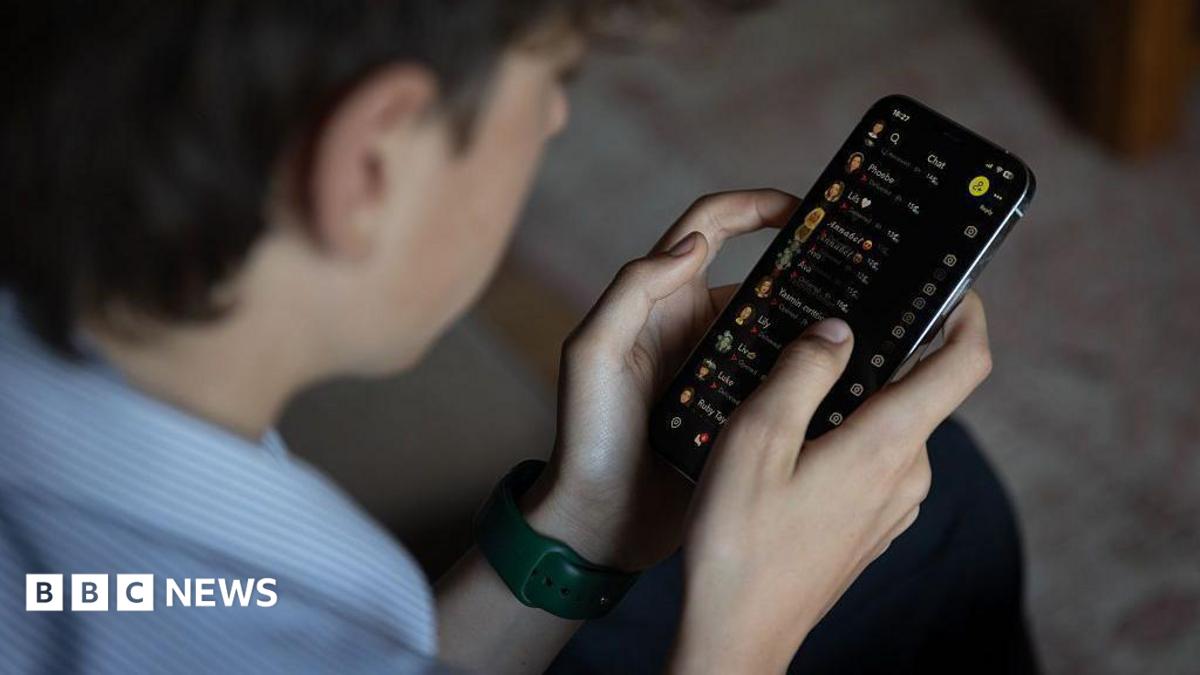
Under-16s will be banned from using social media, Prime Minister Keir Starmer has announced.
Starmer says social media is making children unhappy, making it easier for bullies to abuse children, and is “designed to be addictive”. A ban would give children more time, security, and more freedom to grow up - as well as more opportunities, he adds.
“That is all any parent wants. They want to know that Britain will be better for their children, that they will get a fair chance,” the PM says in a speech in Downing Street.
Starmer adds that the government is “not prepared to compromise” on the safety and happiness of children - and that includes in the regulation and enforcement of this ban. He says the government has listened to and learned from countries like Australia, where a similar ban has already been introduced.
I am in favor of keeping kids off of social media, but I think the method of ID verification as default is entirely wrong.
Parents should ultimately be responsible for the activity of their child. If you can’t trust your child to use the internet/social media responsibly, they simply should not be given access to smart devices.
If a kid gets onto social media and does stupid things there, go after the parents for neglect. The same would happen if I wasn’t supervising my 8-year-old and they sneak off to vandalize someone else’s property.
At most, maybe conversations could happen with ISPs to standardize an optional whitelist system for home consumers with children to block access to key social media domains for unapproved devices, but that’s as far as I’d go. Empower parents with better supervisory tools to be more involved, no need to violate the rights of everyone else.
When people say this, I always think about how we ID for alcohol. If it’s the parents responsibility, they should never let their kid be able to go to the store to buy alcohol in the first place. The store shouldn’t have to ID people. Except most people don’t make this argument. I suppose if you agree with that statement, then you’d be consistent.
The stupid thing is using it. It’s bad for kids development. It’s not dissimilar to drinking. You could blame the parents if the kids got into the alcohol in their own home, but the same would also go for kids using their parents social media accounts.
I know I have been playing devil’s advocate for online ID, but I think it will be implemented in a way that is a privacy nightmare and am not in favor of the way it’s being done. However, is anonymity a right? Before 1980, nobody really got anonymity unless you authored something under a pseudonym, which we can still do. When people were outspoken about civil rights violation, they were often just out there in the public as themselves. Sure they could wear masks, but you couldn’t hide like you can on the internet.
The internet has allowed both for more anonymity than ever and also more tracking of people than ever. I do think it’s coincidental that this is coming at the same time as the birth/growth of AI, but it does kind of serve a convenient second purpose of validating humans (or at least you know that a person is using an AI to post on their account). It’s unfortunate that it’s a benefit, but we live in an age where people using social media/the internet now have to constantly question their reality and if people are even real. I don’t see a good solution to that without violating our previous expectations of privacy.
If age/human verification going to be done, I think it should be done correctly. Age verification could be done through Zero Knowledge Proofs where it only verifies your age and nothing else. I think one day our ID’s will have rotating security keys built into them that will be used both for in person and online verification. You’d be able to decide what information is provided to the website, so that if they only wanted to know “Are you 21+” it would only provide a YES or NO, and that’s it. I’m sure there will be some online method for doing the same thing before then, but it’d need to be tied to some form of biometric verification like a fingerprint or else it could be used maliciously. The most likely scenario is we start off by using phones to tie the ID to the person, and have the phones require some form of biometric lock.
All that to say, we are realistically headed towards a future where the the anonymity we were used to will be no more. At least for any website that doesn’t want AI spam. While just uploading pictures of our ID’s to websites is a terrible idea, it’s what the idiots in charge will likely have us do as this new process starts. If they’d let the smart people take their time to do it right, the whole thing wouldn’t be nearly as bad.
You only get ID’d for alcohol if you look like a kid. I haven’t been carded in years. And when you do get carded, they look at your license, check the date, and hand it right back. No copies are saved to a database that could get leaked who-knows-where.
If a social media site is concerned that a user may be underage, I’m fine with them asking for some sort of verification. But a blanket request on everyone to ID themselves by default is just not the way.
Depends on the place
This is true for most places. There’s nothing stopping a creep from memorizing more than they should, but that’s of course an edge case.
While uncommon, there are places such as casinos that take everyones ID and use an ID scanner to add them to a local, or not local, database. Places that do that really are no different from websites that want to ID. Except with a website you’d provide it once, and at those facilities you have to have it scanned each time you go in.
I couldn’t agree more. It’s a terrible idea and is going to spell disaster for many people. I am not arguing we should have websites collect IDs, my argument is about whether age verification on websites should exist in any form, even if it’s securely setup. Many people here think age verification is strictly a problem of parenting, and I think that’s an absurd argument.
One could argue that kids can go to shops that sell also alcohol, but I can get the logic.
Problem is that a parent cannot check on their kids 24/7, so maybe having a check other than the parent could be a good idea.
Stores should absolutely check for ID since there is no way for them to verify that the parents did their job.
But scientific studies suggest alcohol physically toxic to kids! Social media is…
Well…
Also shown to be toxic. Like, measurably dangerous to your health.
(And I agree about the IDs. Honestly this should be done for alcohol too).