An artificial intelligence model from the Mayo Clinic detected abnormalities on scans up to three years before patients were diagnosed. It's being evaluated in a clinical trial.
Hey lookie here, the statistical pattern matching algorithm has some uses that could help society maybe possibly. Sure beats replacing artists or building inefficient chat bots that give people the Eliza effect.
False positives are at least as dangerous as false negatives and AI solutions like this have massive problems with over diagnosing.
Absolutely 100% wrong.
In pancreatic ductal adenocarcinoma, a false positive means a follow-up scan. A false negative means death, the 5-year survival is near zero once it’s caught late, but exceeds 80% when caught early.
So even in the worst case, the false negative multiple times more deadly. A false positives’ most likely outcome is pancreatitis from the biopsy procedure.
In other words: not useful at all. (Didn’t read the article because it already misuses the AI acronym in the title, indicating it was written by some idiot with nothing to say)


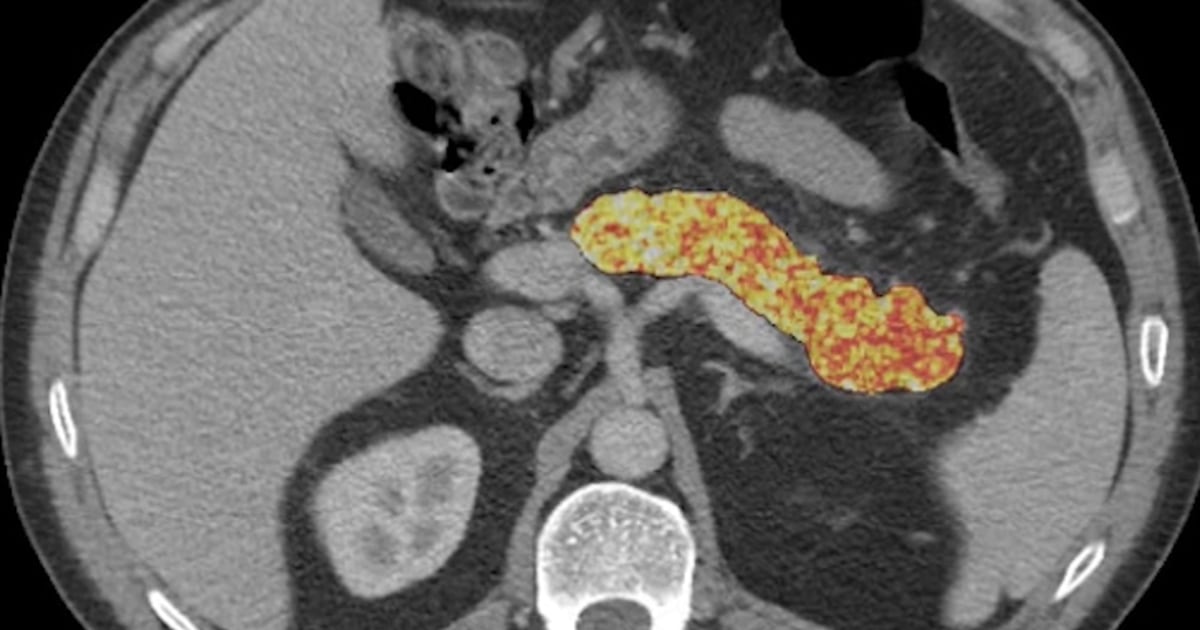
That’s particularly useful for pancreatic cancer, if it’s accurate, reliable, cost effective, and practical in the real world.
Hey lookie here, the statistical pattern matching algorithm has some uses that could help society maybe possibly. Sure beats replacing artists or building inefficient chat bots that give people the Eliza effect.
deleted by creator
Absolutely 100% wrong.
In pancreatic ductal adenocarcinoma, a false positive means a follow-up scan. A false negative means death, the 5-year survival is near zero once it’s caught late, but exceeds 80% when caught early.
In the study, the radiologists’ lower false positive rate is achieved by missing 78% of cancers. That’s not a safer trade-off, it’s just a different way to fail. “Overdiagnosis” also requires a disease that might not have harmed the patient, PDA doesn’t have a harmless form. Every missed case is a lost life while every false positive is an extra doctor’s appointment.
This system detects twice as many cancers and was flagging them, on average, 675 days (nearly 2 years!) before clinical detection.
deleted by creator
If I’m wrong, then feel free to support your position with evidence or an argument showing that my statement was specious.
I linked the, peer-reviewed, paper which contains the data that supports my statements on the topic.
You’ve made two conclusory statements and immediately resorted to insulting comments when challenged.
There is not a single aggressive pancreatic cancer where a false negative is more dangerous than a false positive.
Percutaneous biopsy has a mortality rate of approximately 0.2% even relatively non-malignant pancreatic cancers (say Solid pseudopapillary neoplasm) have 10-year survival rates in adults of around 88% and that number is from cases which received surgical intervention and chemotherapy something that would not happen with a false negative.
So even in the worst case, the false negative multiple times more deadly. A false positives’ most likely outcome is pancreatitis from the biopsy procedure.
Stop being a bad person, please.
You’re rude, arrogant, and wildly incorrect from a medical standpoint. Please delete your message and don’t make comments like this in the future.
This comment should be deleted soon
Saw your edit. I’m not a “home-bound tech worker” and I think you’re projecting. What’re your medical qualifications?
In other words: not useful at all. (Didn’t read the article because it already misuses the AI acronym in the title, indicating it was written by some idiot with nothing to say)
You used the AI acronym in the same way, so I’m confused by your arrogant sounding statement
Did I though? Are they using a model with any kind of abstraction layer that actually understands relationships between objects?
Yes and yes.
These are questions that you wouldn’t have to ask if you didn’t smugly decide that you didn’t need to read before contributing your opinion.
If you can’t be arsed to read the article, here’s the peer reviewed paper in the British Medical Journal: https://www.science.org/doi/10.1126/science.adz4433