First, you don’t have to install the solar capacity in one huge blob.
We are comparing a nuclear power plant with renewables, it make sense comparing them this way.
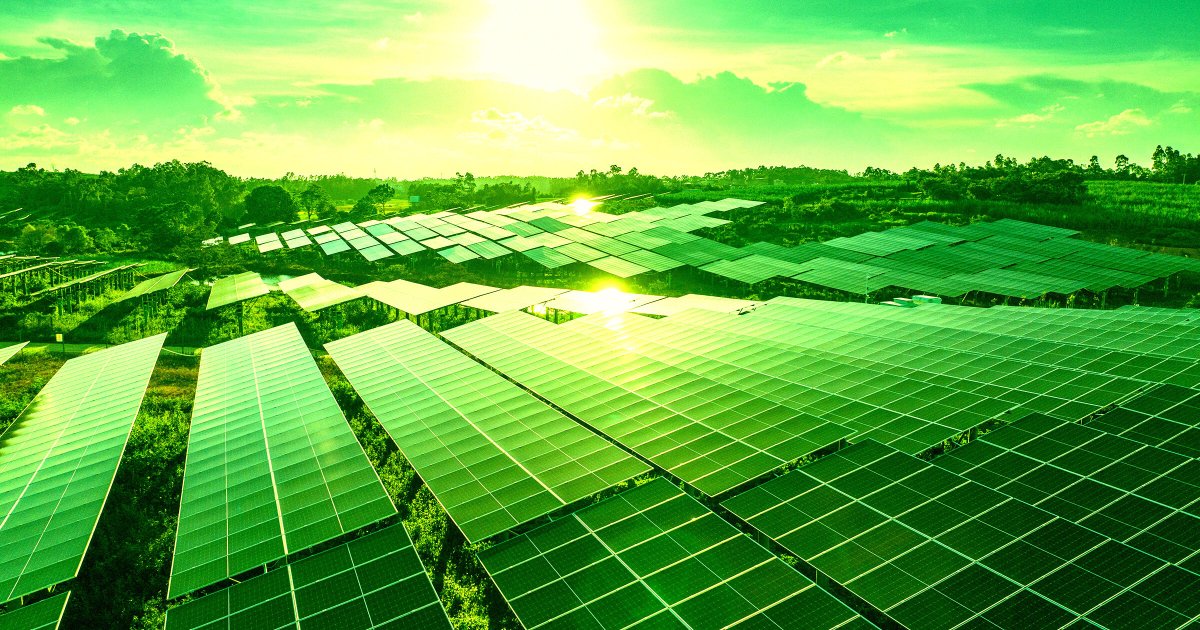
Solar farms also don’t have to be the only use of the land. You can still farm crops that like shade, you can hold cattle, build the energy storage right beneath the solar farm, a car park or what have you. There is also a lot of currently “wasted space”, such as roof tops or existing car parks.
Partially true. but still, we are comparing solar with a nuclear plant not with a distributed system.
Obviously you can make some use of the land under the panels but you still need the same surface if not more.
There are also swimming solar pannels that have the added benefit of keeping lake temparatures in check in the summer. You also have wind turbines that can contribute their fair share to the energy mix. So no, you don’t need to build huge over-capacity
You still need over-capacity unless you are planning to use some other sources during the night. If your needs is 1000 MW/h during the day and 300 MW/h during the night, during the day you need to generate the power you need and all the energy you will need for the night. It is the reason why if I put solar panels on my roof the system come with batteries.
and you don’t need to bulldoze huge swaths of land to install solar.
Yes if you want to make a comparison with a power plant, no if you talk about distributed installations (roofs and so on) but at this point you are comparing apples with oranges.
And the price to build solar and battery storage is still going down.
True, but this is the same as saying “some technology will solve the problem in the future”. What is the cost now to build a plant based on renewables source that can be a drop-in replacement for a 1000 MW nuclear power plant ?
Where are the nuclear plants that use “safer fuels”?
Thorium for one.
Renewables are cheaper to build and run, meaning that renewable energy is always cheaper than nuclear power. You’d need to artificially limit the amount of renewables companies are allowed to build or subidize nuclear, otherwise renewables will price nuclear out of the market.
As I said, cost is not the only factor. Renewables are cheaper, but less than you think when comparing the output, but they have other limitations: solar is good only by day and the generation highly depends on how much sun is out, now panels can produce even if not in optimal exposure but of course they produce less; wind turbines have a range of wind they can be used else they broke for example.
You can combine them, it is the most intelligent thing to do honestly, but if you want to use only renewables you need to generate more power than you need and then store the surplus to be used when it rain or there is not (or too much) wind.
No, solar farms don’t need centralized grids nearly as much as nuclear power does. What is much more important for renewables is monitoring the local grids, so they don’t get overwhelmed by people providing power to the grid with their solar pannels.
Still, you are comparing a single nuclear plant with a distributed system.
To the grid a nuclear power plant and a solar farm are no different: both introduce 1000 MW/h in the system.
In both cases you have a single point of entry to the grid and what is behind this point is irrelevant: you can also have an army of hamsters on wheels.
What are you saying is the obvious thing: if we had n-thousand entry point we need to monitor the grid but even this is not dependent on how you produce the power. If you connect to the grid n-thousand 1 kW/h gas generators you have the same problems.
And people already absolutely do provide power to the grid with their own solar pannels, you denying that just shows that you haven’t mich thought about/experienced local “grass roots” energy production.
In Italy we’ve been doing this for ages, at the time we were even paid to provide the surplus to the grid. It is nothing new to me.
And like I said in other comments already, hydrogen/natural gas power plants are a much better fit to handle extended lulls in wind and solar.
I’m not going to entertain the completely ridiculous and idiotic scenario, in which an energy provider is forced to install all solar capacity in one location. Solar’s biggest strength is its distribited nature and you want to take that away to make your comparison work?


We are comparing a nuclear power plant with renewables, it make sense comparing them this way.
Partially true. but still, we are comparing solar with a nuclear plant not with a distributed system.
Obviously you can make some use of the land under the panels but you still need the same surface if not more.
You still need over-capacity unless you are planning to use some other sources during the night. If your needs is 1000 MW/h during the day and 300 MW/h during the night, during the day you need to generate the power you need and all the energy you will need for the night. It is the reason why if I put solar panels on my roof the system come with batteries.
Yes if you want to make a comparison with a power plant, no if you talk about distributed installations (roofs and so on) but at this point you are comparing apples with oranges.
True, but this is the same as saying “some technology will solve the problem in the future”. What is the cost now to build a plant based on renewables source that can be a drop-in replacement for a 1000 MW nuclear power plant ?
Thorium for one.
As I said, cost is not the only factor. Renewables are cheaper, but less than you think when comparing the output, but they have other limitations: solar is good only by day and the generation highly depends on how much sun is out, now panels can produce even if not in optimal exposure but of course they produce less; wind turbines have a range of wind they can be used else they broke for example.
You can combine them, it is the most intelligent thing to do honestly, but if you want to use only renewables you need to generate more power than you need and then store the surplus to be used when it rain or there is not (or too much) wind.
Still, you are comparing a single nuclear plant with a distributed system.
To the grid a nuclear power plant and a solar farm are no different: both introduce 1000 MW/h in the system.
In both cases you have a single point of entry to the grid and what is behind this point is irrelevant: you can also have an army of hamsters on wheels.
What are you saying is the obvious thing: if we had n-thousand entry point we need to monitor the grid but even this is not dependent on how you produce the power. If you connect to the grid n-thousand 1 kW/h gas generators you have the same problems.
In Italy we’ve been doing this for ages, at the time we were even paid to provide the surplus to the grid. It is nothing new to me.
Maybe natural gas, not hydrogen at the time
I’m not going to entertain the completely ridiculous and idiotic scenario, in which an energy provider is forced to install all solar capacity in one location. Solar’s biggest strength is its distribited nature and you want to take that away to make your comparison work?