

2·
3 days agoNot really once it’s finished. If anything, it might make it harder to saturate with finish.
If I had some teak, I’d give it a shot. In the meantime I’ll provide updates once I start playing with walnut, ebony and rosewood.
Not really once it’s finished. If anything, it might make it harder to saturate with finish.
If I had some teak, I’d give it a shot. In the meantime I’ll provide updates once I start playing with walnut, ebony and rosewood.
Absolutely! I’m running a batch right now, so I don’t have anything that’s been finished. Here’s the proof of concept. 


Reminds me of setting a mandolin neck.
I appreciate your patience lol
deleted by creator
Haha I’ve been doing that for over a decade
I try to be a little choosier these days
Come grab them! All yours!
Eventually you just run out of space
Ahh the good old marquetry approach. I dig it.
Feel free to DM me if there is anything else I might be able to help with.
Good luck!
Pro luthier reporting in.
If you’re using a 3 axis CNC router for carving both the pockets and the inlay pieces themselves, do yourself a favor and get a small diameter end mill (.03125”-.020”).
I do the majority of my pocketing with a 1/16” down cut bit and then reestablish the outer profile with the smaller cut.
Keep your RPMs high and your feed rate low. Take small DOC bites even on cleanup cuts. Those small bits break when you breath on them wrong, so be gentle and don’t overload them. I run mine at 18000rpm, a feed rate of around 10ipm and never push my depth passes past 1/3 of the cutters OD.
Additionally, you may want to resize your pocket a little tighter. I like to oversize my pockets by about .0025” depending on the material, and don’t be afraid to leave your pocket on the machine while you do your test fits so you can open it up further for a better fit.
Also, ebony dust and thin CA glue are great at hiding gaps.
Sorry for the info dump. I just get fired up about this kind of work since it’s my bread and butter.
I love the design so far and look forward to more progress pics in the future!
My pleasure! I’m lucky to work in a field that I am passionate about, so anytime I can share the passion and possibly start someone on their own journey, I jump at it.
Voicing the top/back is largely about tapping the braces plates at key nodal locations and listening for pitches and relationships. From there braces are shaved back to allow for more flexibility where necessary.
I’ll admit that this is were the majority of the magic happens to separate an amazing guitar from a good guitar. Unfortunately, it’s almost entirely subjective and every piece of wood is different, so writing up a guide would prove challenging.
It you’d like to know more, Dana Bourgeois has some good videos on YouTube sort of highlighting his process.
Thank you very much! It’s still in need of some voicing and shaping, but should be ready to glue in an hour or two. I’ll snap some more detailed pics of the braces before I box it up.
Steel string flat tops. Standard X-bracing for the most part.
Gladly! It’s been a long time since I’ve had any work to share, so it’ll be great to have a community to share it with again!


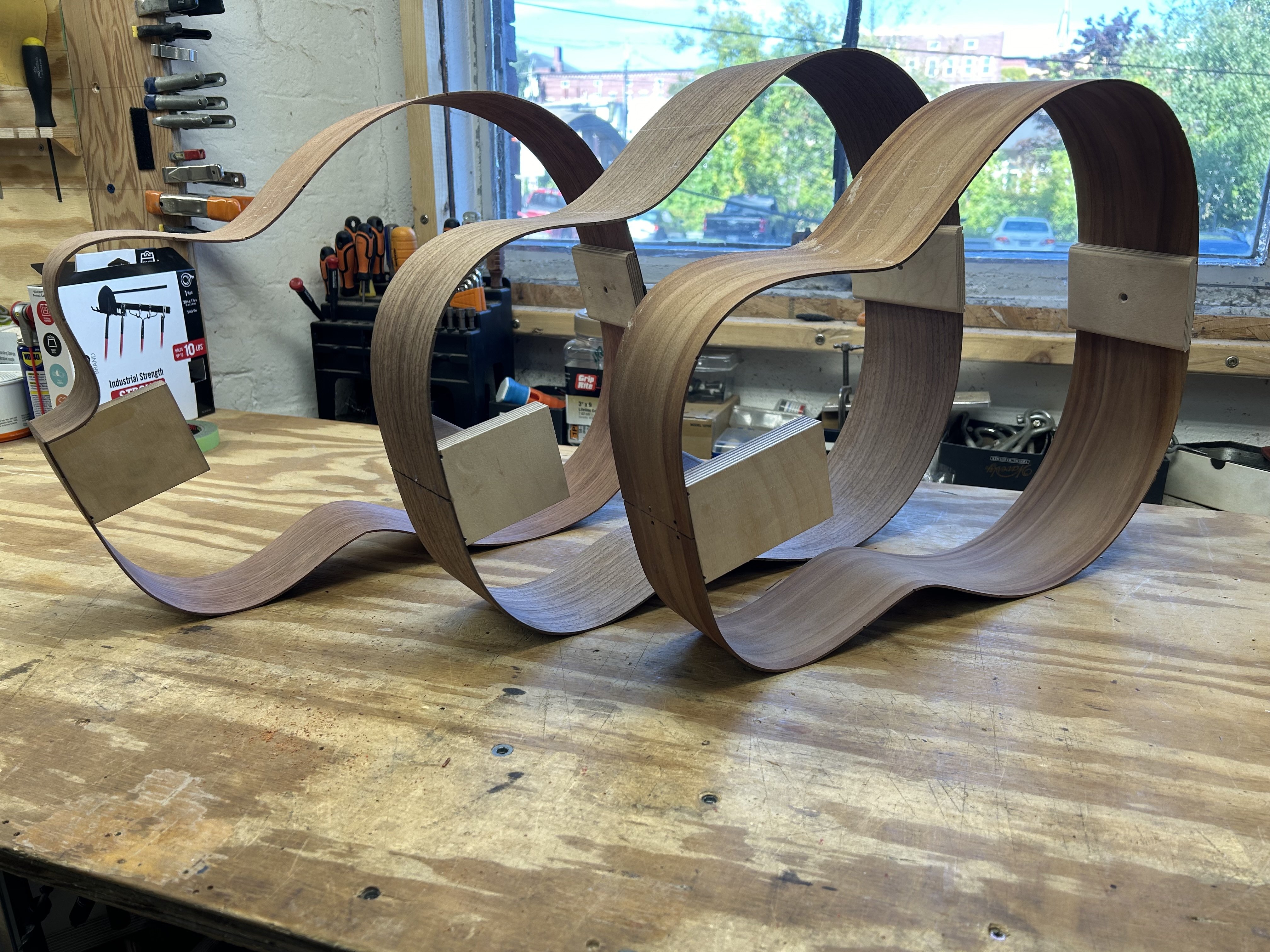
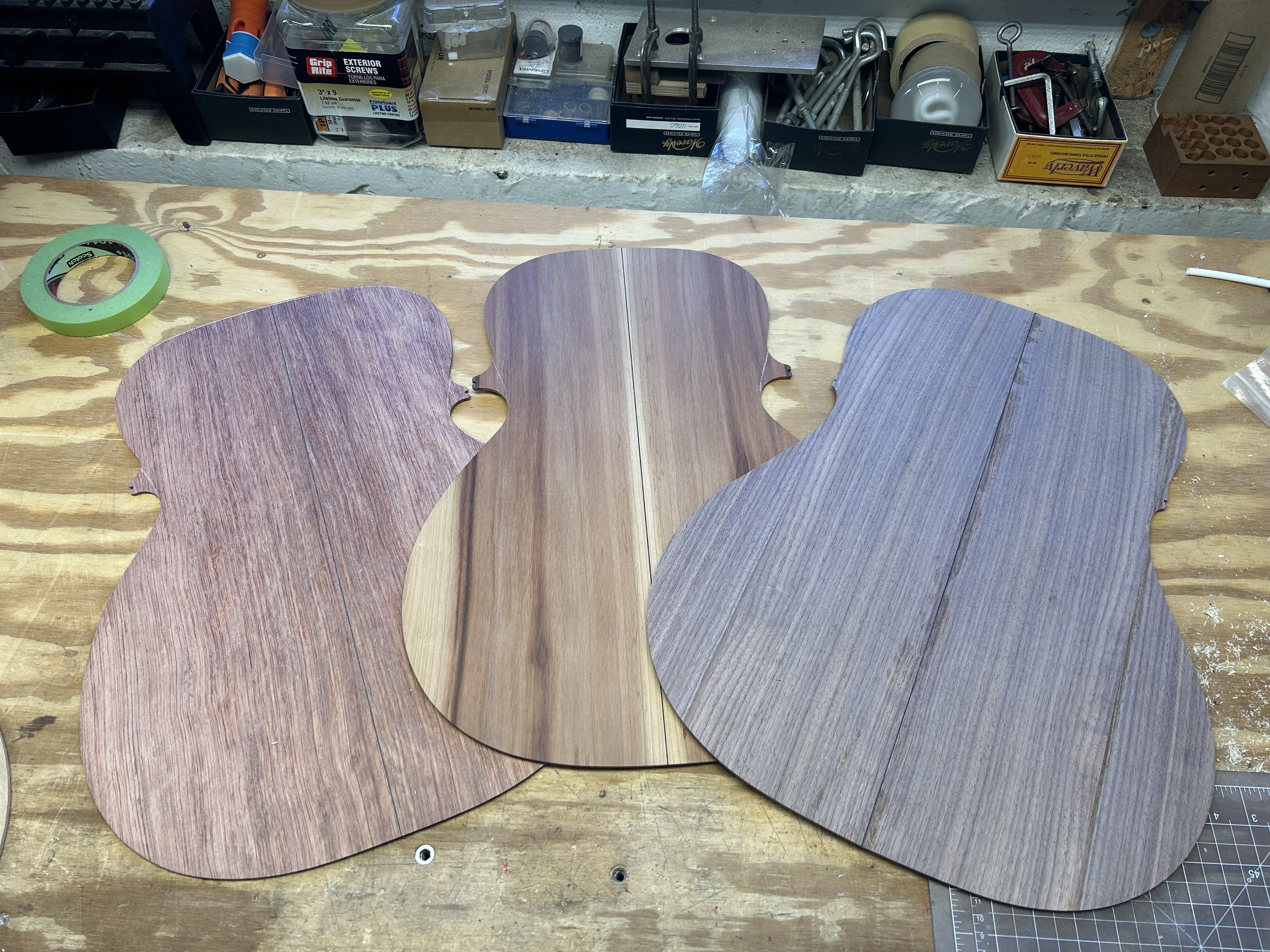
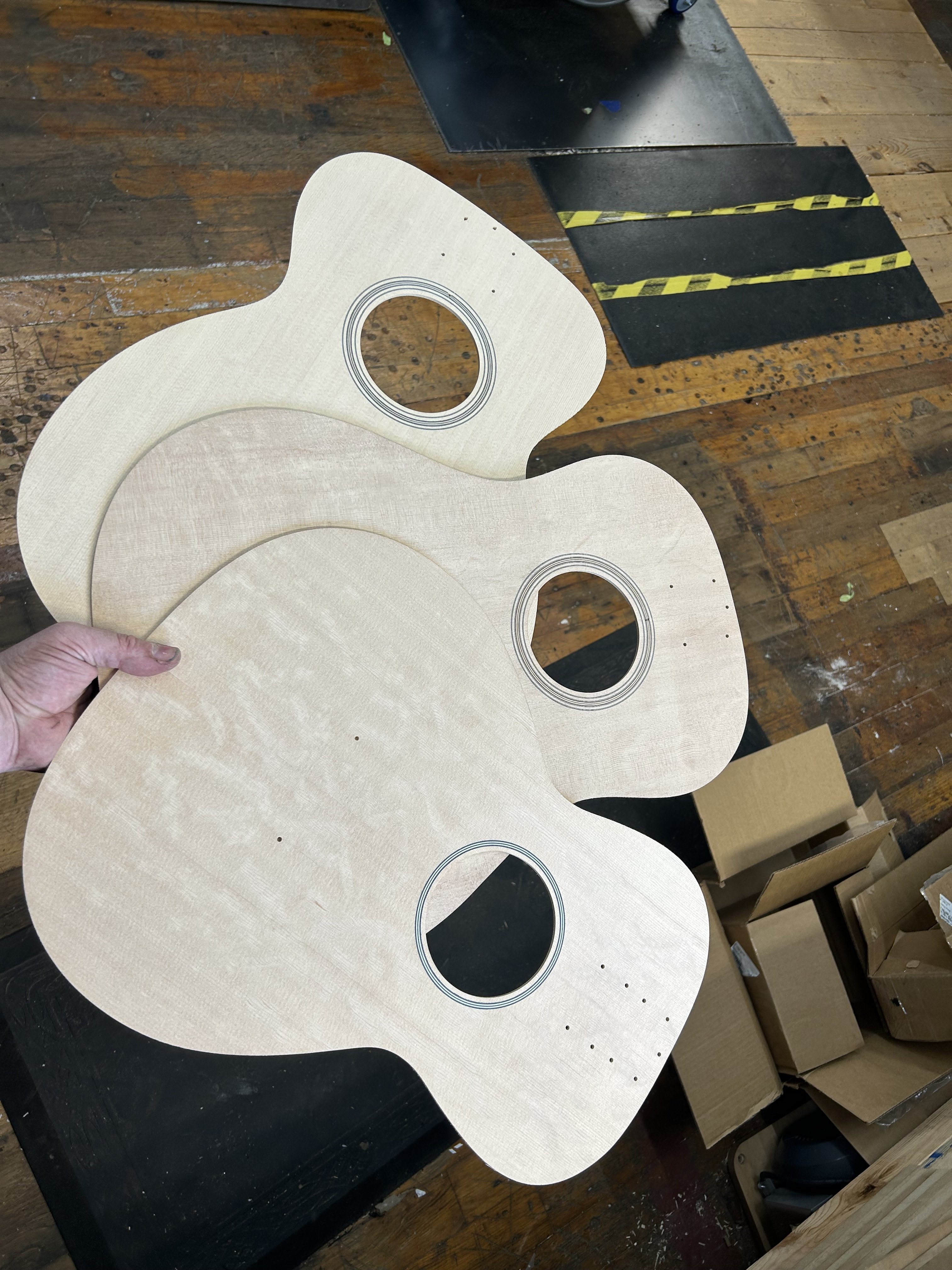
Yeah that’s a bit extreme. I think I spent a total of $15 for this project, but I also already had the majority of my tools. Having access to a CNC also made my life quite a bit easier.