
20/12/2022
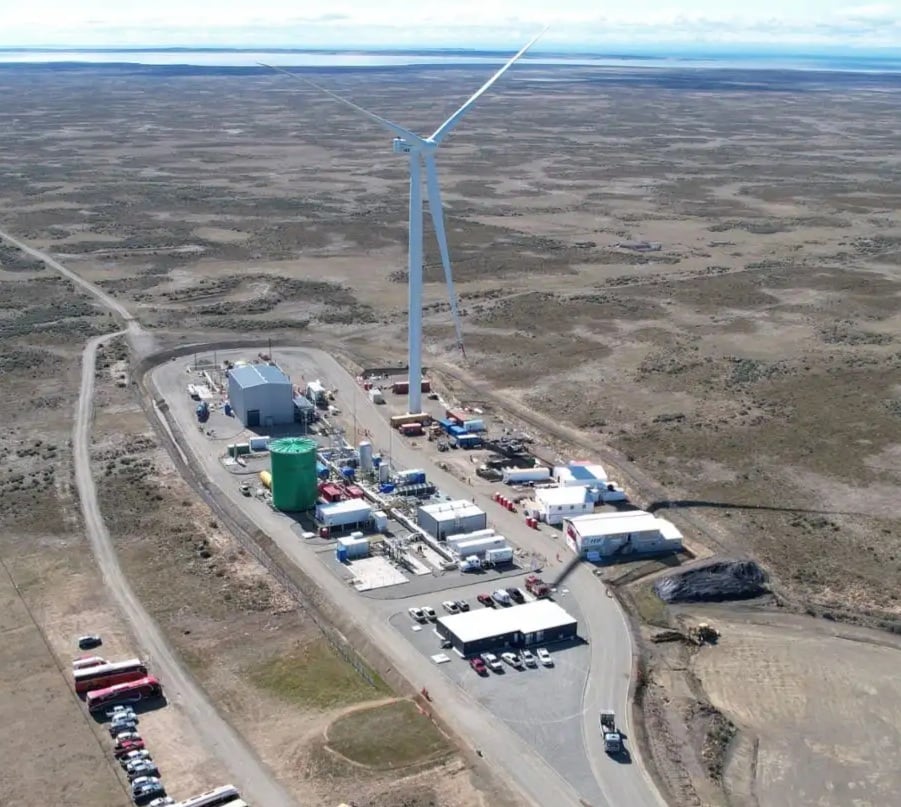
Porsche and international partners working with the Chilean operating company Highly Innovative Fuels (HIF) have started the industrial production of synthetic fuels.
https://newsroom.porsche.com/en/2022/company/porsche-highly-innovative-fuels-hif-opening-efuels-pilot-plant-haru-oni-chile-synthetic-fuels-30732.html
About one order of magnitude more expensive than the fossil kind.
Yes, of course. But climate change is also costly you know …
The issue is more that we’re currently running out of extractable fossils (net energy peak for oil liquids is projected to peak as early as 2025 and the decline into nonextractability is rapid) so it’s a question of having liquid fuels and synthetic stock, at all.
What kind of life style we can expect where hydrocarbons and energy in general is expensive is an interesting question. See e.g. https://surplusenergyeconomics.wordpress.com/ for analysis of that.
Yes I agree. I told you a few days ago here.
what I wrote was :
… about this :
https://surplusenergyeconomics.wordpress.com/2023/07/18/259-the-way-we-live-next/Most interesting indeed.
So the cost of energy is a complex topic and this guy has studied many aspects of that.Amongst other things he wrote :
Morgan, Tim (2013).Life After Growth. Petersfield, UK: Harriman House. ISBN 9780857193391He discusses the energy cost of energy or : Energy return on investment
He gives an estimate of $130 trillion usd for the global cost of energy transition with a link to the source … I don’t understand how this estimate is made though.
Sorry, I haven’t started memorizing Fediverse handles yet. Tim Morgan measures ECoE in percent, and real GDP is GDP minus debt, or x units of debt produce a fraction of that in GDP. Plus ECoE accounting. His model is proprietary, so nobody exactly knows how it’s computed but he himself.
That IRENA model seems to link some large spreadsheets and notes on that page. No idea how complete that is.
As to investments necessary, some two decades ago I estimated we’d need some 3 TUSD/year, inflation-adjusted, for the next 40 years to transition. As a rough estimate that’s as good as any other guess, not facturing in extraction of progressively depleting resources.
That IRENA model seems to link …
Links please 😌 …those links are hidden for me. (Maybe because I’m on mobile.)
(also don’t be sory it was 11 days ago)
Electrofuel : great potential here I believe.
In September 2022, Finnish company Q Power sold P2X Solutions a synthetic methane production unit to be delivered in 2024 in Harjavalta, Finland, next to its 20 MW green hydrogen production plant.
More here : https://en.m.wikipedia.org/wiki/Electrofuel
The more interesting approach is synmethanol, particularly via electrosynthesis. Only half of energy density of gasoline, and suitable for fuel cells, including DMFCs.
Direct methanol fuel cells (DMFCs) still have low power densities … so maybe we should look at molten carbonate fuel cells or simple heat engines ? Anyway, synmethanol looks great !
Methanol or ammonia, both are good
Haber-Bosch for fertilizer, Fischer-Tropsch for synfuel.
But, really, we need something with mild conditions and preferably something directly electrosynthesis driven. Large potential for improvement in both.
I mean ammonia is pretty decent fuel in itself, it can be decomposed to hydrogen or burned as is
The Haber-Bosch approach to breaking the nitrogen triple bond takes a lot of energy in terms of high pressure and temperature which is not present in the product, hence wasted. Ammonia is a fertilizer either as gas or as ammonium nitrate, and too precious to burn.
Another random fact: half of the combustion enthalpy present in liquid hydrogen has been spent on its liquification.
And also, you don’t need to use Fisher-Tropsch process either. Methanol is good enough fuel that you can get more directly from syngas and getting fractions of hydrocarbons this way is simply wasteful (tar formation, too light products etc). Additional benefit is easier conversion back to hydrogen if need be
That is, unless energy density is critical. I don’t think that difference matters in most of the cases
No. Haber-Bosch process is very mature by now and it doesn’t take much more energy than thermodynamically necessary to do so. You get there by recycling heat and reusing energy of compressed gases. The actual problem is getting that hydrogen in the first place
If you want to use hydrogen as a fuel anyway, you can add that little overhead and get fuel that you can either burn in ICE or go the whole nine yards, crack it back into elements and put that in fuel cells, and, more importantly, this comes with massive advantage of ammonia being about as easy to liquefy as propane, and we already have propane fuelled cars. Energy density is vastly higher than hydrogen this way, less than propane, sure, but it’s something
Another option is dimethyl ether, but this thing needs to take carbon from somewhere, just like methanol
Nearly neutral isn’t neutral, and neutral still kills the planet. These stop gaps prolong a business division and profits at the expense of climate catastrophe.
can we create wind and solar panels just from wind and solar panels (('s energy))
PV (solar cells) : EROIs (Energy return on investment) between 8.7 and 34.2 were found … meaning : yes ! … they create much more energy than the energy needed for their production.
it’s all in here (also for wind thingy😋) https://en.m.wikipedia.org/wiki/Energy_return_on_investment