
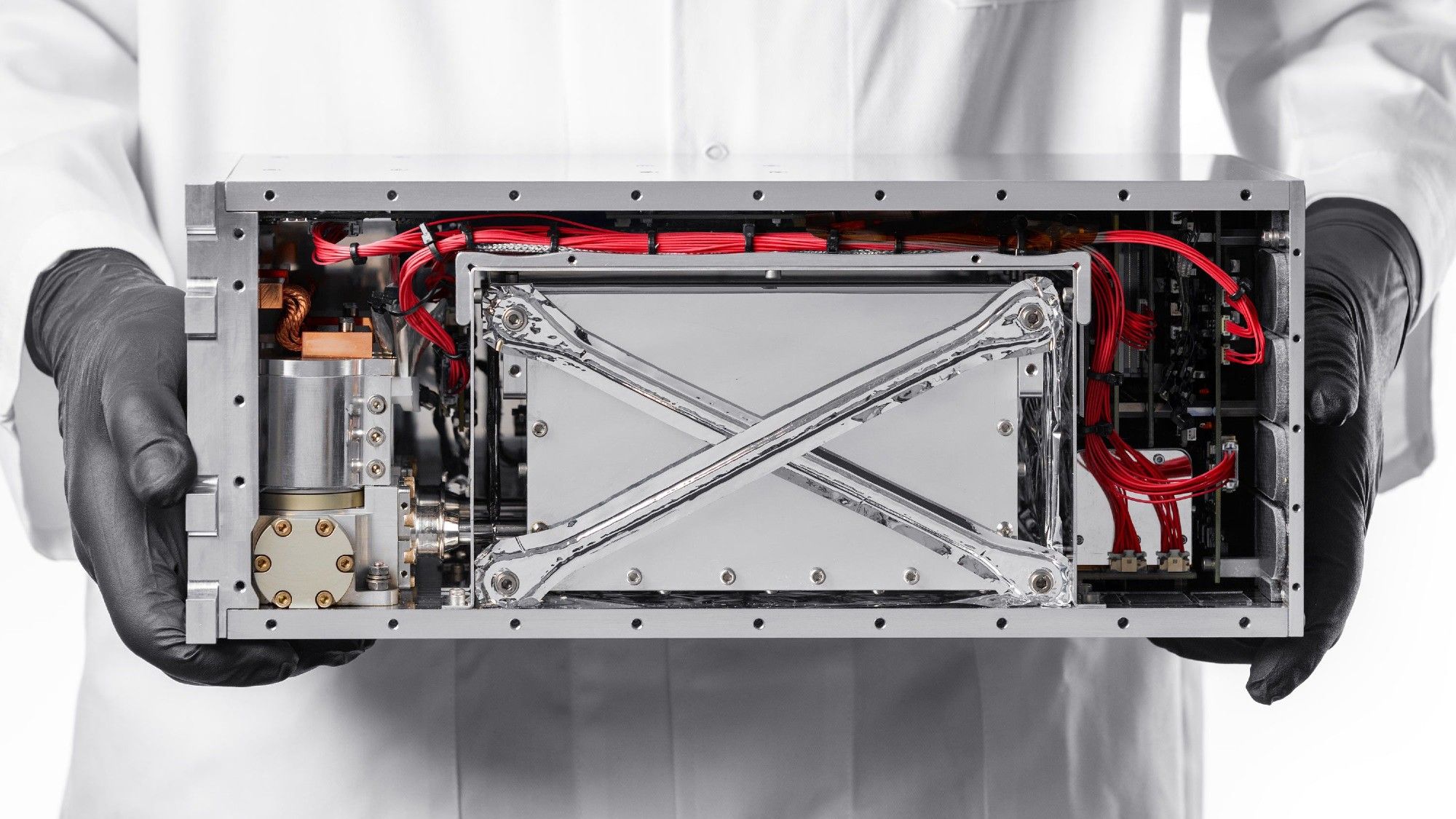
…“Once you have super-conducting technology available in space, you can then create very strong magnetic fields and you can use them for various use cases,” he said. “You can accelerate things in space very fast or change the trajectory of a satellite completely without fuel.”…
“When we go to space, we get hurt by radiation, and these superconducting magnets can create umbrellas of magnetic fields around the spacecraft to protect the interior,” said Arshavsky. “So we can shield people in space from that radiation.”…
Except right now, superconductors only work at very low temperatures, and keeping things at low temps in space requires energy.
Energy is easy enough to get in space with some solar panels and a battery, while fuel has to be sent with the payload. Even if it’s not good enough for constant function, being able to spin them up long enough for a course correction is a pretty big deal.
Right, but then it’s not really “without fuel.” It’s hopefully less fuel, and if you can run it on solar panels, it would be without resupply, but nuclear power could also provide long-term functionality. As always, the most fuel is spent getting things into orbit.
For me, the exciting bit is the magnetic radiation shielding. If we’re going to leave earth behind, radiation shielding is currently a significant missing piece of the puzzle.
They’re not claiming the launch won’t use fuel, just manoeuvring in space, which still solves the problem of getting fuel for manoeuvring while in space. Fuelless launches are a separate issue that other people are working on.
No, keeping parts of things cold in space is easy. As long as something isn’t being hit by direct solar radiation then the default temperature is negative several hundred degrees
This does not move anything in orbit at all, it’s only for turning. It’s better than using cold gas thrusters for turning, but this will not move you to a different point at all.