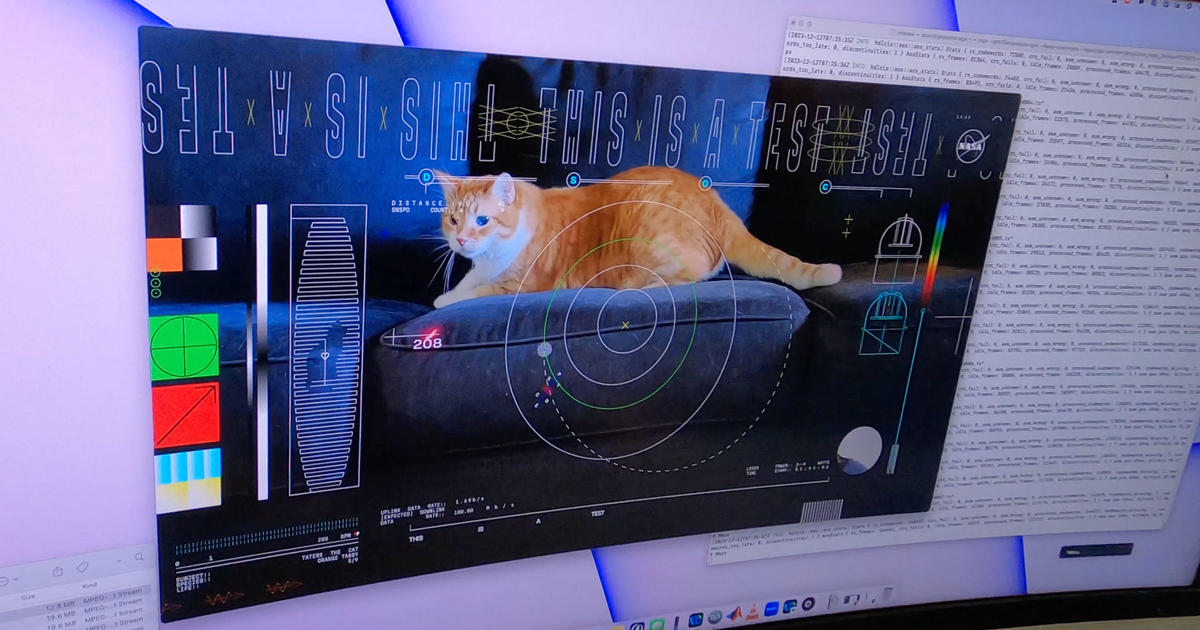
Rapidcreek@lemmy.world to Technology@lemmy.worldEnglish · 3 years agoNASA uses laser to send video of a cat named Taters over 19 million mileswww.cbsnews.comexternal-linkmessage-square34linkfedilinkarrow-up1429arrow-down110
arrow-up1419arrow-down1external-linkNASA uses laser to send video of a cat named Taters over 19 million mileswww.cbsnews.comRapidcreek@lemmy.world to Technology@lemmy.worldEnglish · 3 years agomessage-square34linkfedilink
minus-squareooterness@lemmy.worldlinkfedilinkEnglisharrow-up7·3 years agoYes, the high latency and intermittent connectivity is a big challenge. Delay tolerant networking (DTN) is one good way of solving this problem.
minus-squareRestaldt@lemmy.worldlinkfedilinkEnglisharrow-up4·3 years agohttps://en.m.wikipedia.org/wiki/InterPlanetary_File_System
minus-squareDoorbook@lemmy.worldlinkfedilinkEnglisharrow-up2·3 years agoI think the issue, again will be date and time. DDMMYYYY + Planet + Orbit?
minus-squareRapidcreek@lemmy.worldOPlinkfedilinkEnglisharrow-up2arrow-down3·3 years agoI’m sure several OSI layers have already been modified by NASA to suit their needs. But, the protocols will pretty much remain standard.


deleted by creator
Yes, the high latency and intermittent connectivity is a big challenge. Delay tolerant networking (DTN) is one good way of solving this problem.
https://en.m.wikipedia.org/wiki/InterPlanetary_File_System
I think the issue, again will be date and time.
DDMMYYYY + Planet + Orbit?
UTC and forget
I’m sure several OSI layers have already been modified by NASA to suit their needs. But, the protocols will pretty much remain standard.